Imagine standing on a creaking wooden deck, salt spray in your face, and knowing the shape beneath your feet is the product of centuries of trial, error, and brilliance. That feeling—curiosity, awe, a touch of nostalgia—is what draws people to the evolution of wooden boat types. In this article you’ll travel from dugout canoes to clinker longships, caravels crossing uncharted seas, the elegant workhorses of the Golden Age of Sail, and finally the wooden survivors of the steam revolution. Ready to set sail through history? Let’s go.
Early Beginnings: From Dugout Canoes to Frame-Built Boats
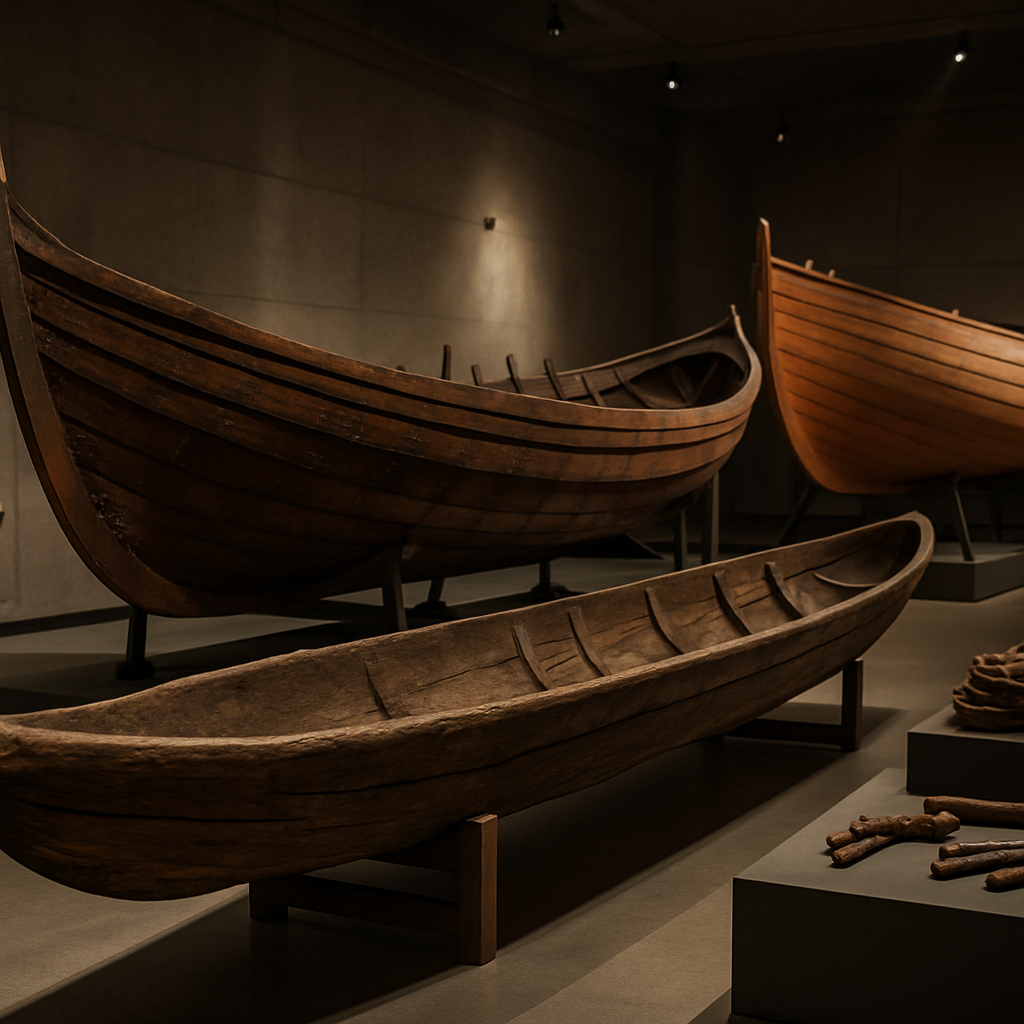
The evolution of wooden boat types begins with the simplest, most direct solution people ever invented to move across water: the dugout canoe. You don’t need fancy tools or blueprints to see why a hollowed log works. Carved with fire, stone, or bronze tools, dugouts let communities fish, travel, and trade. They appear the world over—from the Amazon and Congo to the Pacific islands—proving a universal human idea can be wildly effective.
If you want to see real, tangible examples of these early craft, a curated collection helps bring the story alive: AC Museum’s online and on-site collections showcase a range of preserved forms. Visit the Historic Boats and Vessels pages to view dugouts, sewn-plank craft, and frame-built hulls photographed and described with details about their origins and materials. That kind of close study makes it easier to understand how simple ideas led to complex hull shapes over generations.
For those who love reading about famous examples, there’s something special about tracking individual craft through history and seeing how one boat’s design influenced another; AC Museum offers focused entries that highlight those linkages. The Notable Historic Vessels and Ships section spotlights vessels with famous voyages, remarkable construction stories, or exceptional preservation, giving you a sense of why certain designs survived while others changed or vanished.
Preservation is central to understanding the evolution of wooden boat types, because many lessons come from conserved artifacts and the methods used to keep them intact. If you’re curious about the practical side—how teams slow decay, replace planking, or document original joinery—check out the AC Museum’s page on the Preservation of Historic Boats and Ships, which explains conservation strategies, case studies, and the trade-offs between restoration and preservation.
But humans rarely stop innovating. As settlements grew and demands for cargo and distance increased, builders experimented. Sewn-plank and lashed-lug boats arrived in places where metal was scarce. Planks were stitched together with cordage and reinforced with internal frames. The result: hulls larger and more seaworthy than single-log craft.
Frame-built construction marks another leap. Separating the skeleton (frames, keel) from the skin (planking) meant ships could be built bigger and repaired more easily. That shift underpins much of what follows in the evolution of wooden boat types—you get longer voyages, safer cargo transport, and hull forms that can be sculpted for speed or load.
Think about local materials and how they influence design. Cedar gives you rot resistance and lightness—ideal for coastal craft. Oak gives strength and longevity—great for keels and frames. Builders used what was at hand and adapted. That practical adaptation is a running theme: design evolves not only from genius but from necessity.
- Why dugouts persisted: simplicity, local availability, low maintenance.
- Why sewn-plank boats mattered: they bridged the gap where metal tools were limited.
- Why frame-built design changed everything: larger, reparable, and more versatile hulls.
Viking and Medieval Seafaring: Longships, Knarrs, and the Foundations of Wooden Design
When people talk about wooden boats that changed history, Viking longships jump right to mind. Their clinker—or lapstrake—construction made hulls that were light, flexible, and forgiving in heavy seas. The overlapping planks, usually fastened with iron rivets and sealed with tarred fibers, gave longships a resilience that let them ride waves instead of smashing through them.
Design matched purpose. Longships were narrow, with shallow drafts, and optimized for speed and beach landings. They were as useful for coastal raiding and river travel as they were for open-sea voyages. In contrast, the knarr was the Norse merchant: broader, deeper, and oriented toward cargo. The knarr shows how quickly builders could pivot the same construction methods to meet different economic needs.
Across medieval Europe, the cog emerged for northern trade—flat-bottomed, high-sided, and simple to build. In the Mediterranean, galleys and other types dominated, reflecting calmer seas and different maritime duties. The medieval period is where the evolution of wooden boat types shows a clear split: specialization based on trade, warfare, and geographic opportunity.
Have you ever wondered how these boats actually handled storms? Two features made a difference: flexible hulls that could flex with waves, and rudder improvements that gave better control. Steering moved from steering oars to sternpost rudders, and that meant ships could be larger and sail more reliably across open water.
- Clinker advantages: lightness and resilience—especially suited to northern, rough seas.
- Knarr: Norse cargo workhorse, showing early specialization in the evolution of wooden boat types.
- Medieval adaptations: cogs, carracks, and regional variations shaped by trade networks.
The Age of Exploration: Caravels, Galleys, and the Global Maritime Network
The 15th and 16th centuries flipped a switch: wooden boats became instruments of a globalizing world. The caravel—light, maneuverable, and often lateen-rigged—let Portuguese and Spanish navigators probe the winds and currents with unprecedented confidence. Because caravels could sail closer to the wind than many earlier designs, captains reached places that seemed unreachable just decades earlier.
Galleys, meanwhile, retained primacy in the Mediterranean. With oars as the main propulsion, galleys were tactical tools—fast and deadly in coastal and calm-sea combat, but unsuitable for long ocean crossings. The contrast between caravel and galley highlights a key point in the evolution of wooden boat types: technology adapts to mission. You don’t send a galley to cross the Atlantic; you send a purpose-built ocean craft.
This was also a time for technology transfer. European shipwrights borrowed Mediterranean rigging ideas, while Atlantic builders experimented with stronger fastenings and better caulking. The result was a gradual standardization of certain techniques, and that standardization enabled bigger fleets, longer voyages, and more complex logistical operations—think provisioning colonies and carrying spices and silver back home.
Curious about life on board? Voyages could take months, even with the best ships. Crew habits, hull maintenance, and provisions all shaped design choices. A bigger hold meant longer range; a shallower draft meant access to more ports. That influence of practical daily life on ship design is another constant in the evolution of wooden boat types.
The Golden Age of Sail: Brigs, Schooners, and Hull Forms That Shaped Trade
From the 17th to the 19th centuries, wooden shipbuilding branched into countless specialized types. This era—often called the Golden Age of Sail—saw both art and science applied to hull design. Shipwrights balanced cargo, crew size, speed, and cost. The result: a dazzling variety of forms, each answering a specific set of problems.
Brigs, with two masts and square rigging, were versatile. They could be worked by relatively small crews and proved fast enough for many trades. Schooners, on the other hand, used fore-and-aft sails and excelled at windward performance. They became favorites for pilot boats, coastal traders, and fishing fleets—places where a tight crew, nimble handling, and upwind ability mattered.
And then there were clippers: narrow-hulled, towering-sailed masterpieces designed for speed. When time equaled money—tea, wool, and other perishable or high-value cargoes—clipper lines raced across oceans. The hull form was a declaration: we will trade capacity for speed, and sometimes win big because of it.
Hydrodynamics became more formalized during this time. Builders paid attention to hull lines, volume distribution, and center of effort. Naval architecture evolved from rule-of-thumb craft into a discipline that married empirical knowledge with mathematics.
- Hull trade-offs: fuller hulls for cargo vs. fine hulls for speed.
- Regional choices: Baltic traders used shallow forms; Atlantic traders preferred deep-keel vessels.
- Fisheries and special trades drove smaller-scale innovations like centerboards and leeboards.
Construction Traditions: Clinker vs Carvel Planking and Joinery
The way planks meet makes a world of difference. The two main methods—clinker (lapstrake) and carvel—reflect divergent philosophies in the evolution of wooden boat types. One prioritizes flexibility, the other smoothness and strength.
| Feature | Clinker (Lapstrake) | Carvel |
|---|---|---|
| Construction | Planks overlap and are fastened over one another. | Planks are butted edge-to-edge against frames for a smooth surface. |
| Strength & Behaviour | Flexible and forgiving—good in rough coastal waters. | Stiffer and better suited for larger, ocean-going ships. |
| Maintenance | Easier plank repairs; seams can self-tighten when dry. | Requires careful caulking and fastener selection to avoid leaks and corrosion. |
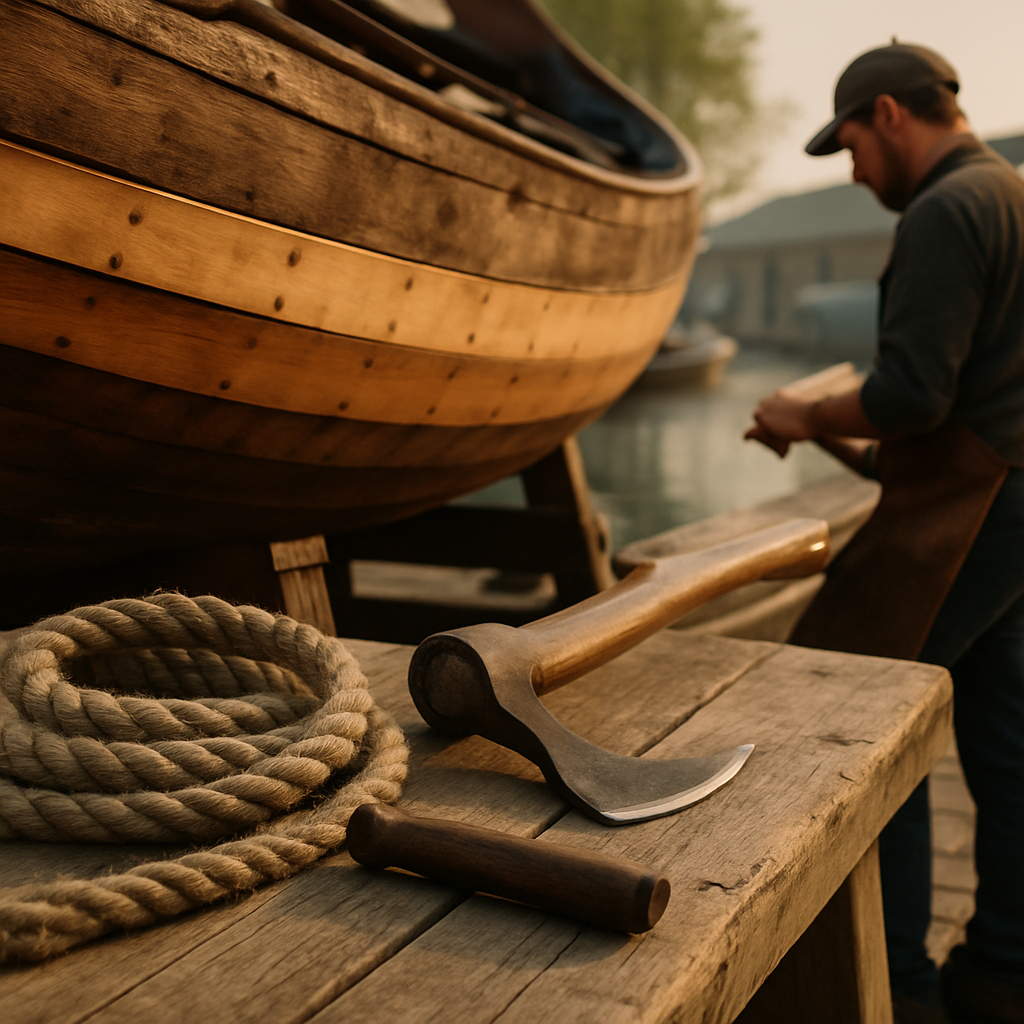
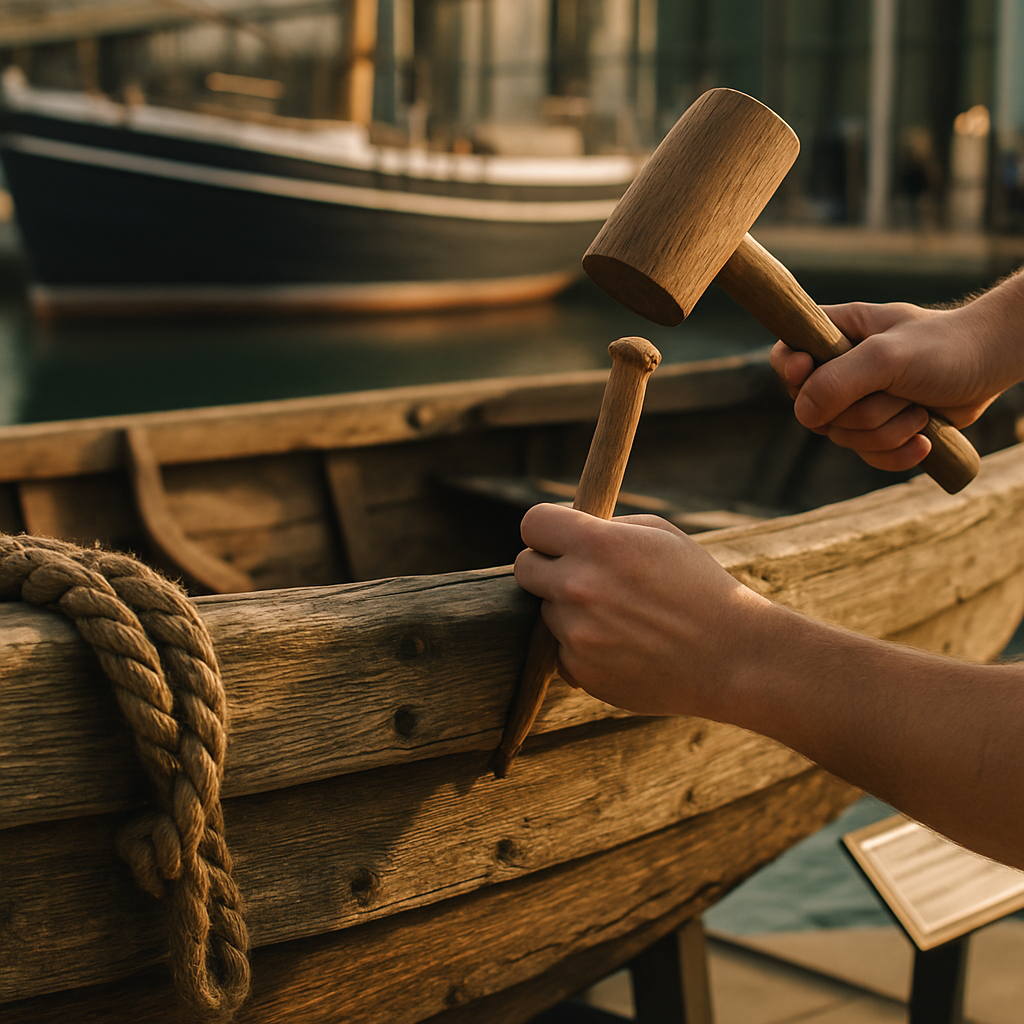
Joinery evolved too. Treenails (wooden pins), iron spikes, and later copper or bronze fastenings each had trade-offs: strength versus galvanic corrosion, availability versus cost. Caulking—stitching seams with tarred fibers—was a craft unto itself. The selection of wood species, the angle of scarf joints, and the placement of frames all played into how well a boat performed and how long it lasted.
In warm waters, pests like shipworm could eat a hull in a few seasons. That reality meant maintenance regimes, the use of sacrificial planks, or even protective copper sheathing became part of the long-term story of the evolution of wooden boat types.
The Sail-to-Steam Transition: 19th–20th Century Wooden Boats and Preservation at AC Museum
The 19th century brought steam, and steam brought a tectonic shift. Iron and, later, steel hulls claimed the big trade routes, but wooden boats didn’t vanish overnight. Instead, they adapted. Composite construction—iron frames with wooden planking—let builders enjoy the tensile strength of metal while keeping the repairability and availability of wood.
Steam changed business models too. Regular schedules, heavier cargoes, and port infrastructure favored metal ships on the longest routes. That relegated many wooden designs to coastwise trade, fishing, recreation, and niche roles. Yet wooden boats retained cultural importance. Small shipyards continued turning out schooners, launches, and pleasure craft well into the 20th century.
Today, the evolution of wooden boat types continues—only now it’s often about heritage rather than pure necessity. Museums like AC Museum are at the center of that work. They don’t just display hulls; they preserve techniques, teach skills, and reconnect visitors with the tactile realities of traditional boatbuilding.
How AC Museum preserves and interprets wooden boats:
- Hands-on workshops teach caulking, plank shaping, and joinery so skills survive beyond static displays.
- Controlled storage and dry docking slow down decay and allow for meticulous restoration work.
- 3D documentation—scanning, drawing, recording—creates digital archives for research and replication.
- Interpretive programming explains not just the how, but the why: economic forces, cultural traditions, and environmental constraints that shaped design choices.
Real preservation often requires hard decisions. Do you fully restore a boat to sailing condition, or do you keep it in “as found” state to preserve original fabric? AC Museum balances these choices carefully, sometimes doing both: reproductions for sail trials, and conserved originals for study.
If you visit, you’ll see a range of wooden types and hear about the messy realities—rot, bad fasteners, and the evergreen battle with marine pests. But you’ll also see the astonishing craft: perfectly scarfed timbers, hand-shaped planks, and caulking joints that have held for centuries when properly maintained.
Quick Identification Guide: Common Wooden Boat Types
- Dugout Canoe: Single-log hull; simple and reliable for sheltered waters.
- Clinker/Lapstrake Boat: Overlapping planks; flexible hull—classic northern form.
- Knarr: Broader Norse cargo boat; built for the Atlantic.
- Caravel/Carrack: Early ocean-going ships used by explorers—maneuverable with decent cargo space.
- Galley: Long, oared craft for Mediterranean work—fast and tactical.
- Brig/Schooner: Specialized for trade and coastal work; rigging defines roles.
- Clipper: Narrow, fast hulls for time-sensitive cargo in the 19th century.
Practical Tips for Enthusiasts and Small Boat Owners
Are you thinking about restoring a small wooden boat or simply curious about maintaining one? A few practical tips from traditional practice:
- Inspect regularly: look for soft spots, open seams, and corroded fastenings.
- Keep dry when possible: removing boats from water during off-season prevents a lot of problems.
- Choose fasteners wisely: the right metal in the wrong place invites corrosion problems.
- Document everything: when you replace a plank or re-caulk, record it—future conservators will thank you.
Restoration is rarely quick or cheap, but it’s immensely rewarding. And if you want to learn, museums like AC Museum often host courses where you can get your hands dirty and learn from master boatwrights.
FAQ — Frequently Asked Questions about the Evolution of Wooden Boat Types
What are the main types of wooden boats I should know about?
You’ll hear a few names a lot: dugout canoe, clinker (lapstrake) boats like Viking longships, knarrs, cogs, caravels and carracks from the Age of Exploration, galleys in the Mediterranean, and later brigs, schooners and clippers from the Golden Age of Sail. Each type reflects a specific need—speed, cargo, shallow-water access, or combat. If you want a quick primer, AC Museum’s collections are a great place to see representative examples and learn the practical differences.
How did clinker and carvel construction differ, and why does it matter?
Clinker (lapstrake) construction uses overlapping planks fastened together, which makes the hull flexible and tough in rough coastal seas. Carvel planking places planks edge-to-edge on a robust frame, giving a smooth, stronger hull suited to larger, ocean-going ships. The choice affected everything—from maintenance and repair to speed and how well a boat handled heavy seas—so understanding that split is central to the evolution of wooden boat types.
What kinds of wood were commonly used, and which should you choose for a restoration?
Oak, teak, cedar, larch and mahogany were popular historically. Oak and teak are prized for strength and rot resistance; cedar is light and naturally decay-resistant, making it great for small craft. If you’re restoring, pick wood that matches the original species where possible, or a compatible modern substitute; consult a boatwright and consider local availability and cost before deciding.
How long can a wooden boat last with proper care?
A well-built wooden boat that’s regularly maintained can last many decades—some survive centuries in museum care. Lifespan depends on wood species, maintenance frequency, exposure to marine borers and moisture, and storage. Regular dry-docking, prompt plank replacement, and good fastener choices extend life significantly.
Are wooden boats still practical today, or are they only museum pieces?
Wooden boats remain practical for pleasure craft, traditional fisheries, and small-scale coastal trades. They’re valued for aesthetics, repairability, and cultural significance. While large commercial shipping favors metal and composites, wooden boats continue to be sailed, raced, and maintained by enthusiasts—and many survive in active use thanks to modern treatments and care.
How does AC Museum preserve wooden boats, and can you get involved?
AC Museum balances conservation with active restoration: they use dry docking, controlled environmental storage, and both minimal-intervention conservation and full reconstructions. You can get involved through workshops, volunteer programs, and docent-led tours—check AC Museum’s schedule to sign up for hands-on sessions or guided conservation demonstrations.
What should I look for when identifying the age or type of a wooden boat?
Look at planking style (overlapping vs. edge-to-edge), keel and frame design, fasteners (wooden treenails vs. iron or copper spikes), and rigging type. Regional details—like shallow flat bottoms for Baltic craft—help too. If you’re unsure, photograph details and consult museum resources or a local maritime historian; they can often narrow down type and period from a few clues.
Can a museum-conserved wooden boat be returned to sailing condition?
Sometimes, yes. Museums choose between preserving original fabric and creating replicas meant for sailing. When original hulls are too fragile, museums may build faithful reproductions for sail trials while keeping the original conserved for study. If AC Museum decides to restore a vessel for sailing, they follow strict protocols to document every change and retain historical integrity where possible.
Conclusion: Why the Evolution of Wooden Boat Types Still Matters
The evolution of wooden boat types is not a dusty history subject—it’s a living narrative about how people solved problems with the materials at hand. Boats shaped trade routes, colonization, cultural exchange, and even wars. They are expressions of place: the Atlantic longship, the Mediterranean galley, the Caribbean schooner—they all tell stories about winds, economies, and people.
Visiting a maritime collection gives you a sense of continuity. You see the scars from past repairs, the choices made under tight budgets, and the artistry of a finely shaped hull. AC Museum keeps these stories alive—not only by preserving vessels but by teaching the skills that made them. So next time you think about the evolution of wooden boat types, remember: it’s as much about people as it is about planks.
Want to explore further? Come to AC Museum, watch a caulking demo, talk to a boatwright, and stand beside a hull that once crossed an ocean. You’ll leave with more than facts—you’ll carry the kind of curiosity that keeps history afloat.