Boats in Exploration and Trade History: An AC Museum Perspective
Imagine a world where routes were unknown, maps were guesses, and a single seaworthy hull could change the fate of nations. That’s the world carved out by boats in exploration and trade history — vessels that stitched together distant shores, ideas, and economies. At AC Museum we celebrate those hulls, the people who built and sailed them, and the ripple effects they created across centuries. Stick around: you’ll learn how boat design steered global routes, why certain technologies mattered more than others, and what stories ships still whisper when you run your hand over an old plank.
Before we dive deeper, consider a few curated pages from our collection.
To explore physical examples and restoration stories that illustrate the themes here, visit our Historic Boats and Vessels page, where hull types and exhibit narratives bring trade histories to life; if you want to understand how lifesaving craft developed in parallel with merchant fleets and what that meant for coastal communities, our Lifeboats and Rescue Craft in History section focuses on rescue technology and human stories of survival; and for in-depth profiles of famous ships that shaped routes, economies, or naval practice, check out Notable Historic Vessels and Ships, which highlights cases where a single vessel left an outsized mark on exploration and trade.
Exploration Voyages and the Role of Boats in Early Global Trade
Boats were the original network infrastructure. Long before planes or fiber optics, they linked markets, moved spices and silver, and carried curiosity across oceans. But not every boat could go everywhere. The capabilities of a vessel — its draft, rigging, storage, and crew skill — determined which routes were viable and which goods could be traded.
Regional pathways and the craft that mastered them
Think regionally for a moment. The Indian Ocean’s monsoon winds favored dhows with lateen sails; the Pacific’s vast distances demanded Polynesian double-hulled canoes; northern Europe’s stormy seas were tamed by clinker-built cogs and longships. Each boat was a solution to a local problem: shallow estuaries, long open-ocean legs, or the need to haul heavy, bulky cargo.
What does that mean for trade? Simple: the shape of commerce followed the shape of boats. If you had a shallow-draft craft, you plied rivers and estuaries, enabling inland markets. If you had a deep, capacious hull, you crossed oceans to connect continents. That interdependence between craft and commerce is a core theme of Boats in Exploration and Trade History.
The Age of Discovery: ships that redrew the map
When the Portuguese and Spanish sent out caravels and carracks in the 15th century, they weren’t just exploring; they were experimenting with vessel geometry, sail plans, and provisioning. Those experiments gave rise to global circuits: the Atlantic triangular trade, the spice routes to Asia, and the silver lanes from the Americas. Cargoes that once moved regionally now circled the globe, and that mattered — for economies, diets, and geopolitics.
You might wonder: were boats the only thing that changed? No. Navigation techniques, state sponsorship, and naval warfare all played roles. But without boats capable of surviving long ocean crossings, none of those global systems could have taken root.
Boats as platforms for discovery and cultural exchange
Boats weren’t passive cargo boxes. They were laboratories on waves: platforms where scientists took botanical samples, where cartographers sketched coastlines, where languages mixed and new ideas spread. Onboard life influenced shore life — food preserved well by sailors could become local staples; shipboard carpentry techniques could be adopted by coastal communities. In short, boats were active agents in shaping the world.
From Hull Construction to Trade Routes: Traditional Boat Building at AC Museum
At AC Museum we make the connection between how a boat was built and where it sailed obvious. When you look at a hull, you’re not just seeing wood and metal — you’re reading a map of intended voyages. Let’s dig into what those construction decisions tell us about trade.
Construction methods and trade implications
Different building techniques produced distinct sailing behaviors. Here are a few common methods and what they implied for trade:
- Clinker (lapstrake) construction: overlapping planks create a flexible hull ideal for rough coastal waters. Vessels built this way were nimble and good for shorter regional trades.
- Carvel planking: edge-to-edge planks on a strong frame meant smoother hulls and higher cargo capacities — suitable for longer voyages and bulk goods.
- Frame-first construction with steam-bent ribs: allowed stronger large hulls that could carry heavier, denser cargoes across oceans.
- Modular features like watertight bulkheads in Chinese junks: these increased survivability and enabled larger-scale coastal and transoceanic commerce.
When you visit AC Museum and examine these construction styles, you begin to appreciate trade as a product of engineering choices and available resources.
Materials, tools, and the shipwright’s art
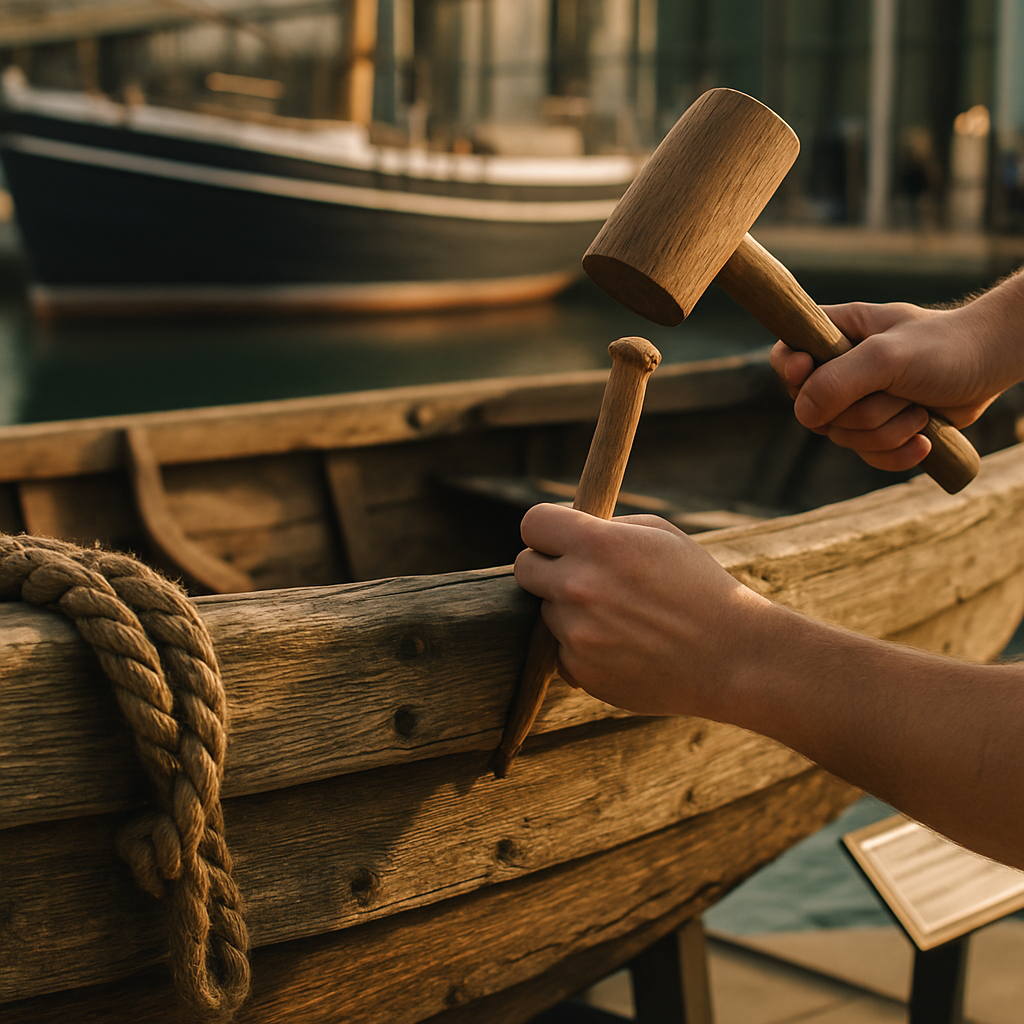
Shipbuilding was as much about local ecology as it was about economy. Oak, teak, pine — each timber brings different strengths and weaknesses. Fastenings could be wooden treenails or iron spikes. Caulking used oakum and tar. The right combo determined maintenance intervals, lifespan, and even how fast a ship could be built.
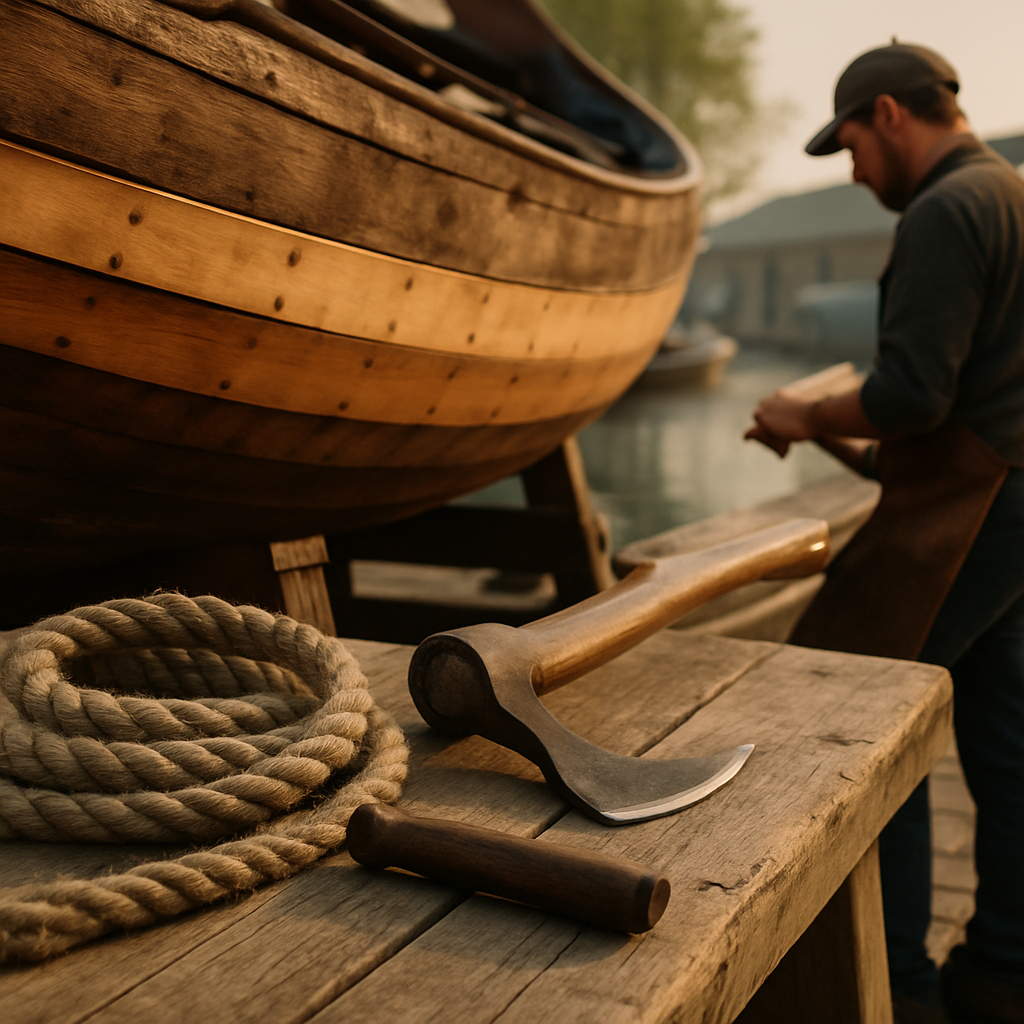
Shipwrights were the engineers, mechanics, and forecasters of their day. They read timbers like a modern engineer reads stress charts, choosing grain, scarf lengths, and curvature to match performance needs. At AC Museum we show you these tools and techniques — and sometimes let you try them. Yes, you can steam-bend a rib. No, it’s not as easy as it looks.
Reconstructing trade routes from hull clues
Archaeologists and curators use hull form, cargo fittings, and wear patterns to hypothesize routes. Shallow-draft bottoms hint at river trade; heavy framing and large holds hint at long-haul bulk carriers. Even residue in a hold can identify spices, metals, or ceramics. Those small physical traces become big historical stories — they tell us what was valued and how far people were willing to go to get it.
Maritime Technology that Shaped Exploration and Commerce
There’s a reason why certain technological shifts felt revolutionary: they changed what boats could do and how reliably they could do it. That reliability is what allowed trade to scale up. Below, I’ll walk you through the most consequential innovations and why they mattered to global commerce.
Navigation and control: the silent revolution
Navigation tools like the magnetic compass, astrolabe, sextant, and eventually the marine chronometer reduced uncertainty. Less uncertainty meant fewer losses, cheaper insurance premiums, and more predictable voyages. The sternpost rudder improved handling, and sail designs that combined square and lateen rigs allowed ships to exploit different wind regimes.
Put bluntly: better navigation + better maneuvering = more reliable trade. Merchants could plan routes, port calls, and schedules with greater confidence. That predictability is a cornerstone of market development.
Power shift: from sail to steam
The 19th century brought steam engines and iron hulls — game changers. Ships no longer had to rely solely on wind patterns. Timetables became realistic. Perishable goods moved faster. Port infrastructure evolved to support coaling stations and later, bunkering for oil. Trade shifted from seasonal and wind-dependent to year-round and scheduled, dramatically increasing the volume and regularity of exchanges.
Material science and ship survivability
Iron and steel changed maintenance cycles and allowed larger, stronger vessels. Add to that advances in metallurgy and you get hulls that could take on heavier loads and survive harsher conditions. These features supported the rise of bulk commodities like coal and grain in previously unthinkable quantities.
Quick timeline of pivotal maritime technologies
| Era | Technology | Why it mattered |
|---|---|---|
| Medieval | Clinker hulls, lateen sails | Coastal resilience; regional trade expansion |
| 15th–17th c. | Caravels, astrolabe | Safe long-distance exploration |
| 19th c. | Steam power, iron hulls | Scheduled trade; larger cargoes |
Cultural Exchange Aboard Historic Vessels
Boats were cultural mixers. Onboard interactions — often intense and prolonged — led to language blending, cuisine sharing, and the spread of religious and artistic practices. Voyages lasted months; during that time, crew and passengers ate together, worked together, and suffered together. That builds bonds, grudges, and new traditions.
Goods, ideas, and the Columbian Exchange
The Columbian Exchange is a classic example of how boats transported more than cargo. Maize and potatoes moved to Europe and Asia, changing diets and supporting population growth. Conversely, Old World livestock and plants transformed landscapes in the Americas. These exchanges were a direct outcome of sustained maritime trade routes and the vessels that kept them open.
Crews, ports, and hybrid cultures
Ships’ crews were often multinational. A Mediterranean captain might employ sailors from West Africa, the Baltic, or South Asia. Languages mixed into pidgins and creoles; religious practices syncretized; culinary habits traveled and took root. Ports, in turn, became reflection points for these hybrid cultures. Walk through an old port town and you’ll still see the architecture, the markets, and the food that migration and trade created.
Storytelling and intangible heritage
Don’t underestimate songs, sea shanties, and oral histories. They carried navigational knowledge, morale-boosting rhythms, and social rules. They also preserved memories of voyages that official logs missed. At AC Museum we play recordings and invite older sailors to share stories so you can hear how people felt about their life at sea — not just what they moved from A to B.
Preserving Maritime Heritage: What Visitors Learn at AC Museum
If you ask most visitors why they came, many will say: to see a ship up close. But what they leave with is broader: an understanding of how boats in exploration and trade history shaped economics, environment, and culture. Our job is to make those connections obvious, honest, and engaging.
Hands-on exhibits and conservation in plain sight
We don’t hide the restoration process. You can watch conservators grind, glue, steam, and stitch vessels back to life. Why is this important? Because conservation choices reflect interpretation. Do we restore a ship to a single moment in its life, or conserve layers that show its entire use? We discuss both approaches openly with visitors and community stakeholders.
Educational programs and community engagement
Schools bring pupils to learn basic seamanship and navigation. Adults join workshops on shipwright skills and maritime law history. And we partner with local communities and descendant groups to ensure narratives — especially around colonial trade and slavery — are handled sensitively. History isn’t just artifacts; it’s people’s lives. We treat it that way.
Why this matters for you
Understanding Boats in Exploration and Trade History helps you make sense of today’s world. Modern supply chains, shipping lanes, and even some geopolitical tensions have roots in those early maritime networks. When you see a restored hull at AC Museum, you’re looking at a node in a long chain that still affects what you eat, what you wear, and how economies function.
Visiting AC Museum: Practical Highlights
Planning a visit? Here are a few things you shouldn’t miss — whether you’re a casual visitor, a student, or a maritime nerd (we welcome you, honestly).
- Dockside tours: inspect hulls and rigging up close and learn about construction choices that guided trade routes.
- Live demonstrations: watch steam-bending or caulking; try knot-tying yourself.
- Interactive navigation exhibit: use period tools to plot a course and feel the thrill of pre-GPS wayfinding.
- Rotating thematic exhibits: from spice trade stories to the role of ports in cultural exchange.
Frequently Asked Questions
Below are the questions people most often search for about “Boats in Exploration and Trade History” and what you can expect from AC Museum. These answers are practical and geared toward visitors, researchers, and community members.
What types of historic boats and vessels can I see at AC Museum?
You can see a wide range of craft, from small coastal skiffs and traditional fishing boats to large replicas of trading vessels that crossed oceans. Exhibits include hulls illustrating clinker and carvel construction, watertight-bulkhead designs like Chinese junks, and restored merchant ships that reveal cargo layouts and living spaces. If you want specific examples before your visit, check our online collection or ask at the front desk so we can point you to the displays most relevant to your interests.
Are there displays or programs about lifeboats and rescue craft?
Yes — AC Museum documents the parallel history of lifesaving technology alongside merchant vessels. You’ll find exhibits that trace the development of lifeboats, rescue protocols, and coastal stations, showing how rescue craft evolved in response to both increasing traffic and harsher conditions. These displays highlight human stories of survival and the engineering behind saving lives at sea.
Do you address difficult topics like the transatlantic slave trade and colonial commerce?
We do, and we handle them carefully. Our exhibits place economic narratives in human context, acknowledging suffering, exploitation, and long-term impacts. We work with descendant communities, historians, and educators to present evidence-based interpretations that are respectful and honest, and you’ll find dedicated panels, artifacts, and programs that explore these histories.
Can I watch conservation and restoration work while visiting?
Yes. Many conservation projects are visible from public areas, and staff or volunteers often explain ongoing work. We schedule behind-the-scenes sessions and guided talks where you can learn about stabilization, wood treatment, and rigging repairs. If you’re particularly interested, ask about timed sessions or join a conservation workshop.
Are there volunteer, apprenticeship, or hands-on opportunities?
Absolutely. AC Museum offers volunteer roles and apprenticeships in shipwrighting, conservation, guided interpretation, and educational programming. These opportunities are ideal if you want practical skills or to contribute to restoration projects. Check our volunteer page or contact our education team for application details and schedules.
Is the museum good for school groups and families?
Yes. We run curriculum-linked school programs that teach seamanship basics, navigation, and maritime history through hands-on activities. For families, there are build-a-boat workshops, scavenger hunts, and interactive exhibits tailored to different ages. Group booking options and educator resources are available to make visits smooth and educational.
How do historic boats relate to modern shipping and global trade?
Historic boats laid the foundations for today’s trade routes, legal frameworks, and port infrastructures. By studying hull designs, propulsion changes, and navigation advances, you can trace how supply chains evolved. Seeing historic vessels helps you understand issues like maritime regulation, environmental impacts, and trade patterns that still affect economies and daily life.
Can researchers access the museum’s collections or archives?
Yes. AC Museum supports scholarly research and offers access to object records, conservation reports, and some archival materials by appointment. Contact our collections manager to request access, and provide details about your research aims so we can prepare relevant documents or schedule supervised visits.
What practical info should I know before visiting (tickets, hours, accessibility)?
Check our website for current hours and ticketing options; we offer general admission, family passes, and discounts for students and seniors. The site is largely accessible, with ramped access to docks, hearing-assist devices for talks, and staff available to arrange accommodations. If you have specific accessibility needs, contact us ahead of time so we can ensure a comfortable visit.
Can I host private events or educational tours at the museum?
Yes, AC Museum hosts private events, group tours, and customized educational sessions. Our waterfront setting and dockside exhibits make for memorable corporate or community events. Reach out to our events coordinator to discuss capacities, catering options, and thematic tours.
Still have a question? If you don’t see your question here, drop us an email or call the museum — we love nerdy maritime queries and practical visitor requests alike, and we’ll get you an answer fast.
Conclusion: Boats as Agents of Change
Boats in exploration and trade history weren’t neutral. They were instruments of discovery, commerce, power, and culture. Hulls carried goods and ideas; sailors carried techniques and songs. AC Museum aims to present all of that — the engineering brilliance and the messy human outcomes — so you can leave informed, curious, and maybe a little nostalgic for a time when the world was still being mapped.
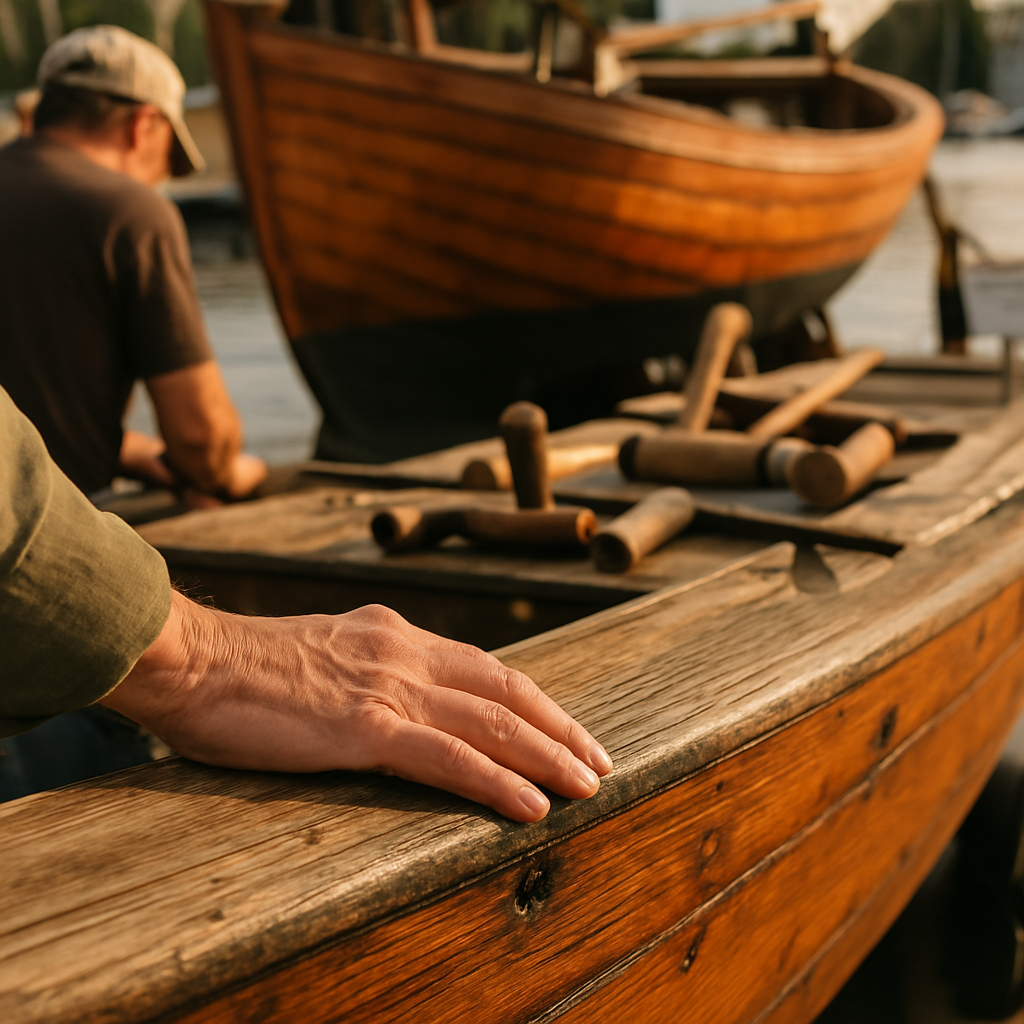
If you’re intrigued, come see a ship up close. Run your hand along a centuries-old plank. Ask a shipwright why they chose a particular scarf joint. You’ll hear a story that ties your morning coffee, the shirt you’re wearing, and the spices in your pantry back to a wooden hull, a weathered sail, and someone who navigated by stars.
Ready to explore? Whether you’re a history buff, a curious traveler, or someone who just likes the smell of tar and old wood, AC Museum invites you to dive into the long, winding story of boats in exploration and trade history. Bring questions, bring friends, and yes — bring sensible shoes for walking on deck.