Discover How Wooden Boats Were Born: Traditional Hull Construction Techniques That Shaped Seafaring — See Them Up Close at AC Museum
If you love the smell of fresh oak shavings, the satisfying ring of a trenail driven home, or the quiet logic of a well-cut scarf joint, you’re in the right place. This guest post takes you through Traditional Hull Construction Techniques as explored at AC Museum, delivering practical detail, historical context, and a few trade secrets that aren’t in every textbook. You’ll get clear explanations of shell-first and frame-first philosophies, learn how frames and planks get their shape, discover why certain fastenings were chosen across regions, and come away with tangible questions to ask on your next visit. Expect hands-on tips, thoughtful comparisons, and a bit of storytelling—because boats are built by people, and people leave traces in every tool mark.
If you want to dive deeper into practical maintenance and conservation topics that keep historic craft afloat, AC Museum provides focused resources such as Caulking, Sealing, and Historic Vessel Maintenance, which explains traditional sealing materials and modern conservation choices in detail. For makers curious about joinery specifics, the museum’s guide on Joinery for Wooden Boat Building presents mortise-and-tenon patterns, knee fitting, and trenailing techniques in clear, illustrated steps. And if you’d like a broader orientation to the craft, the museum’s overview page Traditional Boat Construction Techniques collects the major methods and their historical contexts so you can compare approaches at a glance. These resources are practical and geared to both enthusiasts and early-stage builders.
Traditional Hull Construction Techniques: An Overview at AC Museum
Traditional hull construction techniques are a blend of material knowledge, geometry, and generations of hands-on refinement. At AC Museum, “Traditional Hull Construction Techniques” describes recurring practices like timber selection, lofting, framing, planking, fastening, and caulking—each adapted to local wood supplies, sea conditions, and intended use. You’ll see work that ranges from lightweight, beachable lapstrake dinghies to heavy carvel merchantmen designed for long ocean passages.
Two broad philosophies recur in historic practice: shell-first, where the skin is established and supports follow, and frame-first, where an internal skeleton defines shape before the planking is applied. Neither approach is “better” in the abstract; each answers environmental and economic constraints. Understanding these choices helps you read a hull’s design decisions—why a boat can survive rough weather, or how easily it can be repaired in a small fishing village.
Exploring Wooden Hull Framing at AC Museum
The frame is the backbone of a wooden boat—the ribs and floors that resist hogging, carry loads, and define the hull’s shape. In the museum’s workshops and displays, you can compare full frames, cross-sections, and assembled futtocks to see how builders translated lofted lines into three-dimensional structure.
Frame-first method: layout and components
Frame-first construction begins with lofting: full-size lines drawn on the floor that establish station shapes and frame curvature. From there, the keel is set, the stem and sternpost erected, and floor timbers and futtocks assembled. Frames are often made from multiple pieces scarfed or keyed together because single-piece ribs of sufficient size were rare. The careful placement of frames and their spacing—defined by lofting—ensures the hull’s symmetry and structural balance.
Shipwrights traditionally steam-bent or laminated timbers to achieve compound curves. In practical terms, that meant planning the steam schedule, knowing grain behavior, and sometimes cutting long scarf joints to maintain continuity where a single log wasn’t available. Each decision reduced stress concentrations, which matters when the hull takes pounding in a seaway.
Shell-first and composite approaches
Shell-first construction is common in smaller craft or in regions where builders prioritized quick-build methods. Planks are assembled into a complete shell and then fitted with internal frames. This approach creates a hull that can be lightweight and flexible—useful for boats launched off beaches or used inshore. Composite methods blend frame-first and shell-first steps to suit timber availability or timeline demands, giving builders practical flexibility. The museum’s side-by-side examples make these distinctions obvious: look for tool marks, plank sequencing, and where internal supports were later added.
Tools and practical skills
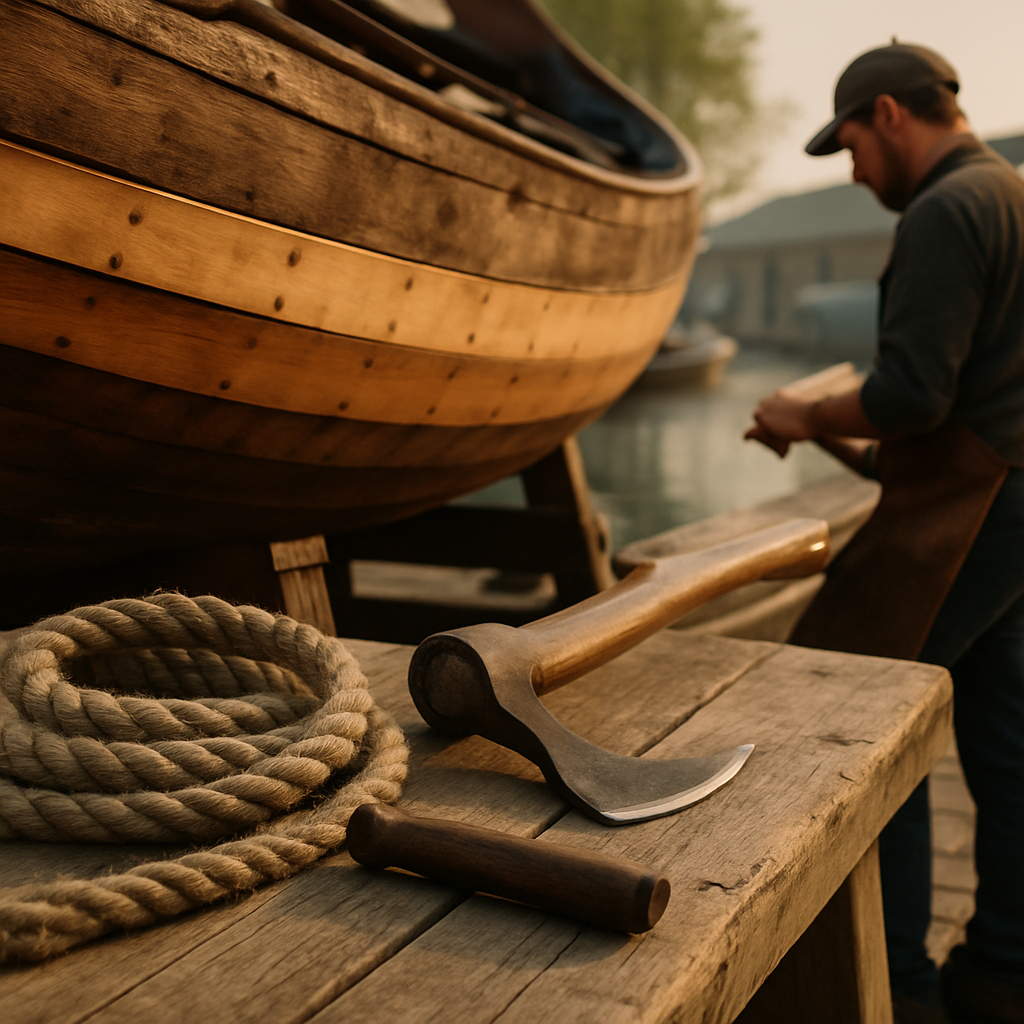
Traditional shipwrights used a compact set of tools—adzes, broad axes, spokeshaves, braces and bits, planes, caulking irons—but they developed tremendous tacit skill in their use. Lofting demands spatial reasoning, and fitting a trunnel or a long tenon requires both patience and a practiced eye. Watch a live demonstration and you’ll see why apprenticeships were long: the subtleties of grain direction, steam timing, and test-fitting matter, and they only come with time on the bench.
Planking, Fastening, and Sealant Traditions in Historic Boats at AC Museum
Planking is where a hull moves from concept to function. How planks are arranged and fastened affects hydrodynamics, durability, and repairability, while caulking traditions determine how watertight a boat remains under long use. The museum’s exhibits let you inspect planking profiles, fastener choices, and seam treatments up close.
Clinker (lapstrake) versus carvel planking
Two primary planking methods shaped much of Northern and Mediterranean boatbuilding. Clinker, or lapstrake, overlaps planks so that each plank’s edge sits over the next, creating a lighter, more flexible hull—ideal for beach-launched boats or ships that needed a forgiving ride in choppy coastal waters. Carvel planking uses edge-to-edge planks fastened to strong internal frames, producing a smooth hull surface favored for larger cargo vessels where capacity and hydrodynamic efficiency were priorities.
Spotting the difference is simple: overlapping ridges signal clinker; a smooth, continuous skin signals carvel. That first visual clue often tells you a lot about the boat’s origins and intended service.
Fastenings: treenails, spikes, and bolts
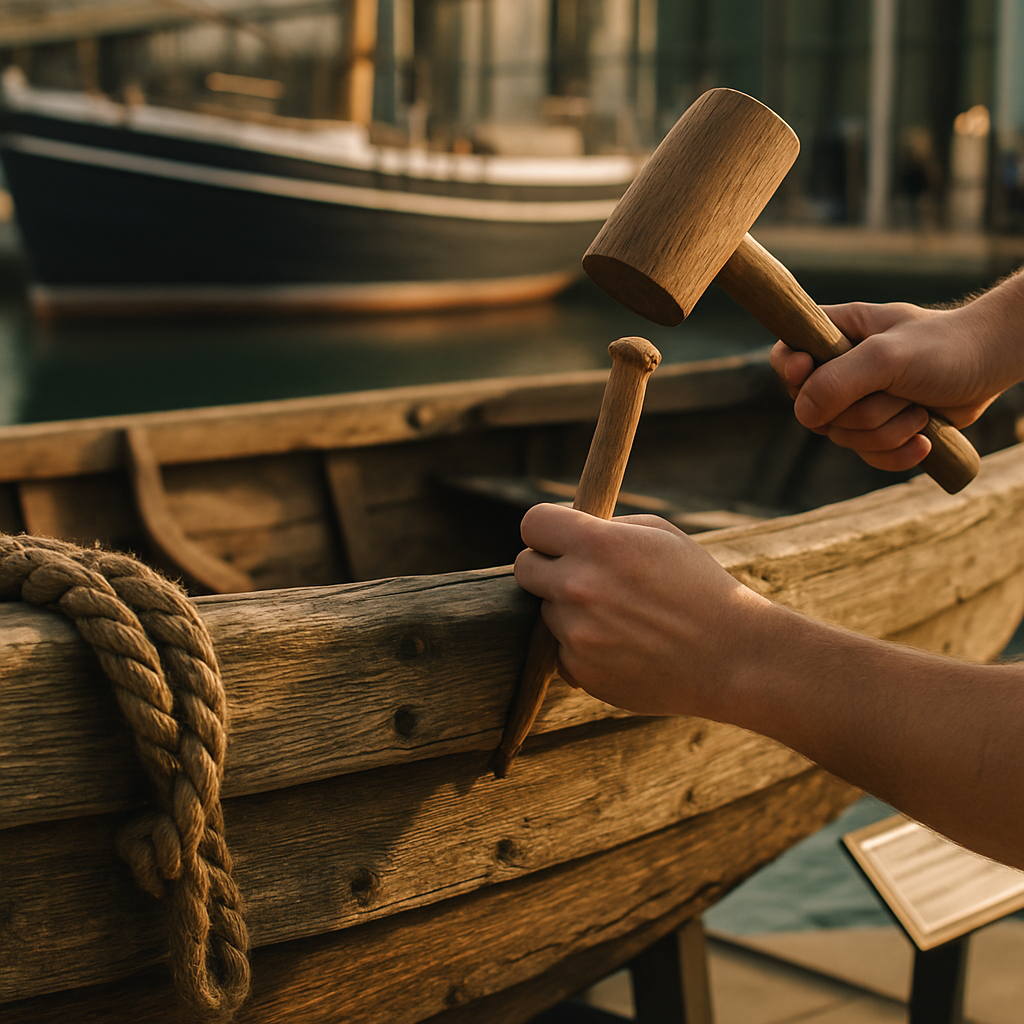
Fastening methods evolved with metallurgy and regional preferences. Treenails (trunnels) are wooden pegs that swell when wet and tighten joints—a clever, corrosion-free solution. Metal spikes and nails became more common as forges improved; copper was prized in saltwater where iron corrodes quickly. Through-bolts and heavy iron fittings appear in load-critical areas like keelsons or engine beds on later craft. The museum shows how builders balanced the trade-offs: durability, cost, and ease of future repairs.
Sealants and caulking traditions
Seams were made watertight with oakum—tarred hemp or jute—driven into gaps with caulking irons and then covered with pitch or tar. This system provided flexibility and durability when maintained. Modern conservation sometimes uses synthetic substitutes, but when authenticity is the goal, oakum and pitch remain the standard choices. Try a caulking demo and you’ll learn how rhythm and compression matter; it’s a surprisingly physical craft.
Mortise-and-Tenon Joinery and Frame Assembly in Maritime Craft at AC Museum
Mortise-and-tenon joinery is a hallmark of skilled woodworking and appears in many historic hulls. At the museum you’ll see long plank tenons, short pegged tenons for knees, and complex assemblies that distribute structural loads smoothly.
How mortise-and-tenon works in hulls
The tenon (a projecting tongue) fits into a mortise (a corresponding slot) and may be pegged or trenailled for security. In hulls, long tenons tie adjacent planks together, creating continuity across multiple strakes and reducing reliance on individual fasteners. The effect is a more unified skin that resists separation under load, which is why many excavated hulls with such joinery remained coherent even after long submersion.
Advantages and challenges
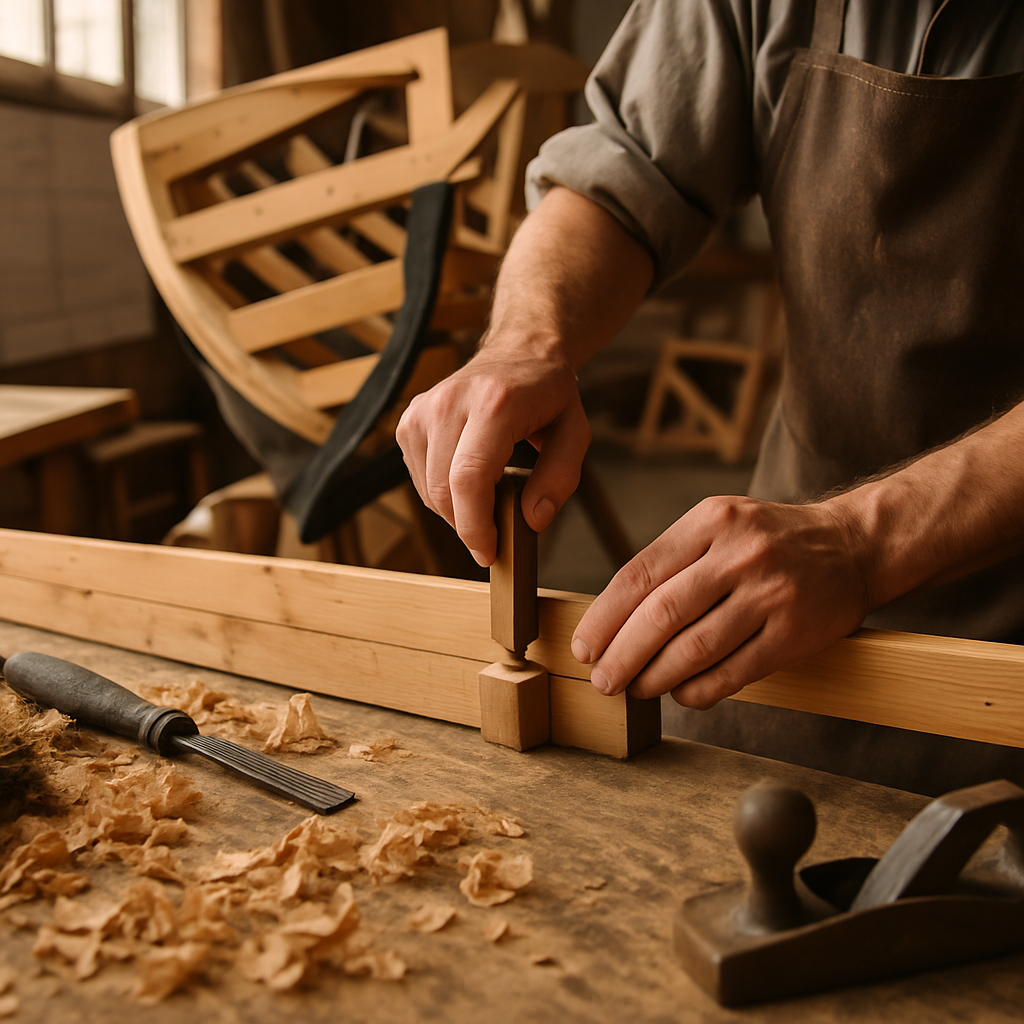
Mortise-and-tenon joints are strong and avoid dependence on corrodible metal, but they require precise cutting, careful timber selection, and considerable labor. Shipwrights used full-size templates and dry-fitting to ensure perfect contact before pegging anything home. That attention to fit is part of why these joints have such longevity when well-maintained.
Keel, Rib, and Stem Work: The Skeleton of Classic Hulls at AC Museum
The keel, stem, and ribs determine the hull’s geometry and strength. The museum’s displays show how builders selected, scarfed, and reinforced these critical members to handle the stresses of sea and cargo.
Keel selection and workmanship
Keels were prized for straight grain, length, and rot resistance—live oak, English oak, or Douglas fir depending on availability. Single-piece keels were ideal but rare; where they weren’t possible, long scarf joints joined multiple timbers into a continuous backbone. These scarf joints were carefully cut and bolted or trenailled to transfer bending moments without creating weak spots.
Stem and sternpost design
Stems and sternposts shape the bow and stern, absorbing groundings and the rig’s loads. Steam bending and laminated construction allowed timbers to follow compound curves, while protective rubbing strakes and stem knees preserved vulnerable ends. You can see tool marks and hankering lines on many museum pieces—little signatures of the maker’s hand and method.
Keelson, riders, and internal longitudinal reinforcement
Inside the hull, keelsons and riders stitch floors and frames together, distributing longitudinal stresses. In larger vessels, these members are bolted or strapped heavily to create a unified structural system able to tolerate heavy cargoes and long voyages. The museum’s cross-sections show exactly how these internal members join and support the more visible exterior timbers.
From Seafaring to Shipbuilding: How Historic Hull Techniques Shaped Maritime History at AC Museum
Hull construction techniques are social technologies: they spread through trade, warfare, migration, and apprenticeship. AC Museum interprets boats not just as artifacts but as agents of economic and cultural exchange that influenced routes, ports, and even international politics.
Technology spreading with trade and conflict
When peoples and navies met, boat designs traveled with them. For example, northern clinker traditions influenced coastal craft design across the North Sea, while Mediterranean shell-first methods adapted to local needs. Innovations like carvel planking allowed larger cargo vessels to emerge, contributing directly to the growth of long-distance trade networks and the opening of new maritime routes.
Regional adaptation
Builders adapted to local timber species, wave climates, and harbor conditions. Lapstrake hulls excelled where lightness and beach-launching mattered; carvel hulls suited deep-water trade and heavy loads. Recognizing these regional choices helps you read a boat’s design like a regional accent—each distinctive, practical, and full of history.
Craft traditions and apprenticeship
Shipwrights learned through apprenticeship: observing lofting, feeling grain behavior, timing steam, and mastering caulking rhythms. AC Museum preserves oral histories and workshop reconstructions so that tacit knowledge—what to do when a joint doesn’t fit perfectly, or how to judge a piece of timber—continues to be shared. That transfer of skill keeps the craft alive and meaningful beyond the artifacts themselves.
Conservation, Restoration, and Living Skills at AC Museum
Conserving historic hulls requires balancing authenticity with structural safety and public interpretation. AC Museum follows principles that prioritize minimal intervention, clear documentation of replacements, and preventive measures like humidity control to slow decay.
Restoration ranges from consolidation—treatments to stabilize degraded timber—to full replacement of elements too compromised to retain. When pieces are replaced, the museum matches species and joinery and documents each intervention so future conservators can trace what was original. That transparency respects both the artifact and the scholarship it supports.
Public programming and skills transfer
Workshops at AC Museum let visitors try lofting, caulking, and simple joinery, bridging museum interpretation and hands-on craft. These sessions are not only enjoyable—they’re vital for keeping skills circulating among new generations of makers and conservators. If you attend, ask specific questions and prepare to get your hands dirty; you’ll learn more that way than by watching alone.
Visiting AC Museum to See Traditional Hull Techniques in Action
Want to make the most of your visit? Look for cross-sections that show plank/frame relationships, original timbers with visible tool marks, lofting tables, and caulking demonstrations. Docent-led tours explain decisions shipwrights made when selecting materials and methods, and interactive exhibits let you try techniques on scaled pieces. Photographers should check the museum’s policy on lighting, but close-up shots of joinery details can be great study aids for later projects.
FAQ — Common Questions About Traditional Hull Construction Techniques
Q: What are “Traditional Hull Construction Techniques” and why should I care?
If you’ve ever wondered how a tree becomes a seaworthy hull, this is the short answer: Traditional Hull Construction Techniques are the combined methods—lofting, frame-first or shell-first assembly, planking styles, joinery types, fastening choices, and caulking traditions—that allowed people to build durable wooden boats. You should care because these techniques explain a boat’s behavior, repair needs, and history. When you understand them, you can read a boat’s design like a map and make smarter decisions about maintenance, restoration, or building a replica.
Q: What’s the difference between clinker (lapstrake) and carvel planking?
Clinker (lapstrake) planks overlap, creating a lightweight, flexible hull often used in northern, beach-launched craft; carvel planks are edge-to-edge, producing a smooth, stronger hull when fastened to a solid frame, ideal for larger cargo vessels. Each method has advantages: clinker gives flexibility and easier beaching, carvel gives capacity and cleaner hydrodynamics. Your choice depends on where and how you’ll use the boat.
Q: How long do wooden hulls last, and what affects their lifespan?
Wooden hull longevity varies widely: well-built and maintained boats can last a century or more, while neglected hulls can rot in decades. Key factors are wood species, exposure to moisture and marine borers, maintenance (regular caulking, coatings, and drying cycles), and storage conditions. Preventive care—keeping timbers dry, treating for pests, and fixing leaks promptly—adds years to a hull’s life. Conservation choices also matter when you’re dealing with historic vessels.
Q: What is caulking and why is it still important?
Caulking seals the seams between planks to prevent water ingress. Traditional materials like oakum (tarred hemp) combined with pitch or tar are still effective and historically accurate for restorations. Proper caulking allows a hull to flex while staying watertight. Even with modern coatings, good seam preparation and sealing are essential for long-term hull health—so yes, caulking matters, even today.
Q: Are wooden boats still seaworthy in the modern age?
Absolutely. Many wooden boats are actively sailed and fished today. Modern treatments, improved fasteners, and better preservation techniques make wooden hulls both safe and practical when maintained correctly. That said, wooden boats demand regular care—more so than many modern materials—so be ready for ongoing maintenance if you choose wood.
Q: How do conservators decide whether to repair or replace historic hull parts?
Conservators weigh authenticity, structural safety, interpretive value, and future maintenance needs. Minimal intervention is preferred, conserving original material where feasible. When replacement is needed for safety or stability, replacements are documented, matched in species and technique when possible, and marked in records so future researchers can distinguish original from new. The goal is to preserve the artifact’s story while ensuring it can be displayed or used safely.
Q: What materials and fastenings were historically used, and how do conservators handle metal corrosion?
Historically, builders used treenails, iron spikes, copper fastenings, and through-bolts depending on region and era. Copper was valued for saltwater use because it resists corrosion better than iron. In conservation, corroded metal is assessed for structural risk—sometimes cleaned and conserved, sometimes replaced with corrosion-resistant alloys or documented replicas. Decisions balance structural needs with historical fidelity.
Q: Can I learn traditional boatbuilding skills, and where should I start?
Yes. Start with museum workshops, local boatyards, or community classes—AC Museum offers hands-on sessions like lofting and caulking demos that are perfect for beginners. Pair practical workshops with reading and small projects at home (a simple dinghy or model). Apprenticeships and volunteering at restoration projects are excellent ways to deepen skills over time.
Q: How do I tell if a plank or joint on a museum boat is original or a later replacement?
Look for differences in wood species, patina, tool marks, and fastening types. Replacements often show fresher tool marks, a different grain appearance, or modern fasteners. Museums usually document interventions, and you can ask docents for records. Visual clues plus conservation records will give you the full picture.
Q: Why does AC Museum focus on Traditional Hull Construction Techniques?
Because these techniques are central to maritime heritage and tell stories about technology, trade, and daily life. By preserving hulls and teaching construction methods, AC Museum helps visitors understand how boats were built, used, and maintained—and why those choices mattered for local economies and global exploration. The museum’s programs keep craft knowledge alive so future generations can both study and practice these skills.
Conclusion — Why Traditional Hull Construction Techniques Still Matter
Traditional Hull Construction Techniques are living knowledge: tactical ways to turn imperfect timber into seaworthy structure. They demonstrate adaptability—how communities used available resources, solved structural problems, and passed skills through generations. AC Museum preserves these methods as working crafts, not static curiosities. Seeing a mortise cut, a trenail driven, or a scarf joint planed to a perfect fit gives you a visceral connection to the past and practical insight into how to design and care for wooden vessels today.
Next time you encounter a wooden hull—on display or afloat—look for the joinery, the fastener patterns, and tool marks; they all tell stories. If you’re inspired, take a workshop, try lofting a simple dinghy, or volunteer at a local boatyard. You’ll come away with new respect for the craft, a practical skill or two, and a story to share that connects you to centuries of maritime ingenuity.