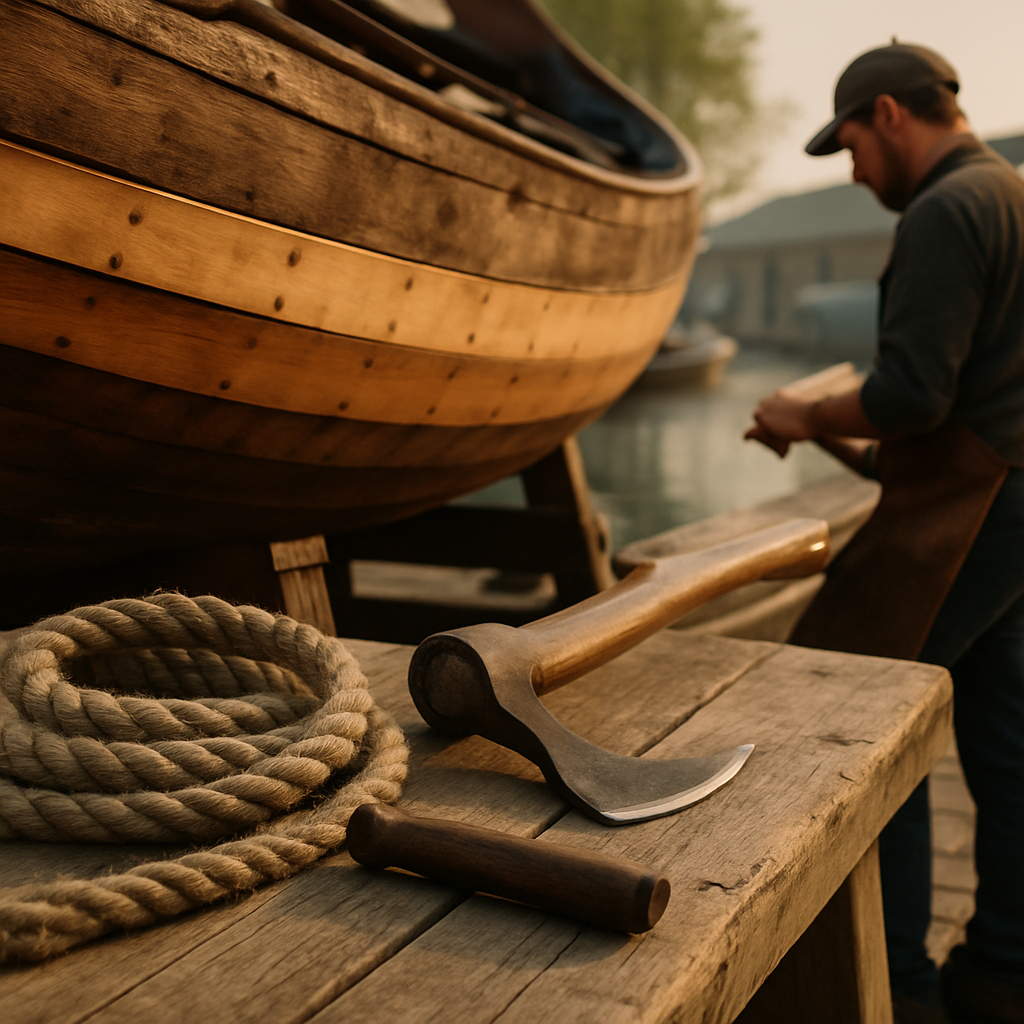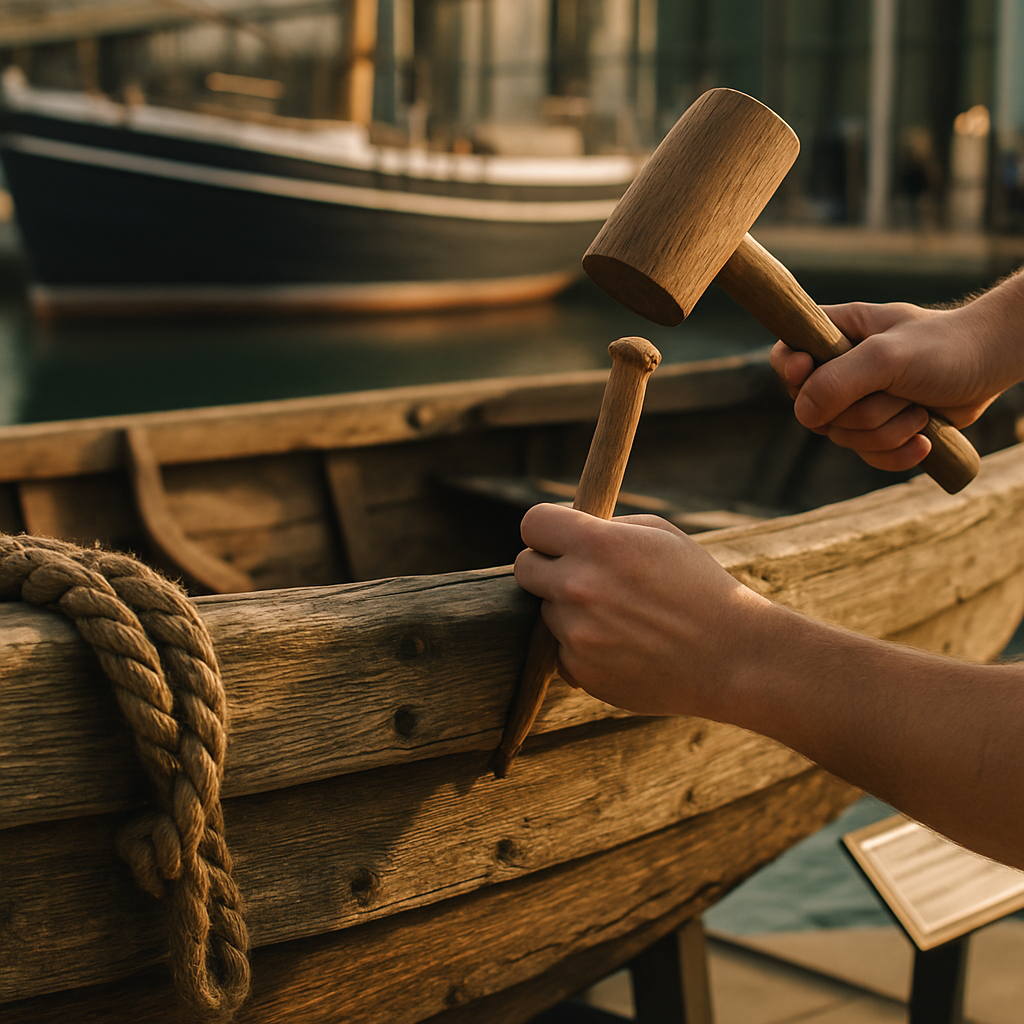
Imagine stepping aboard a wooden boat that smells faintly of tar and old rope, hearing the soft creak of planks as the hull settles in the water — and knowing that every sealed seam is the result of hands-on care, tradition, and careful choices. This article explores Caulking, Sealing, and Historic Vessel Maintenance from both practical and conservation perspectives. You’ll find clear how-to guidance, material comparisons, museum best practices from AC Museum, and ways maintenance work becomes a living classroom for maritime history.
The Role of Caulking in Historic Vessels
Caulking is the unsung hero of wooden boats. At its simplest, it’s the process of filling the seams between planks so the hull keeps water out. But on historic vessels caulking does more than keep you dry. It controls how the hull moves, protects timber and fastenings, and preserves the vessel’s original character. Think of it like the mortar in a stone wall — remove it without thought and the whole structure changes.
Why is this important? Because wood breathes and moves with moisture and temperature. A well‑done seam allows for controlled movement: it can swell in humid months and shrink in dry months without opening a path for water. Overpacked seams, or seams filled with the wrong kind of rigid material, can lock timber movement and cause splits or trapped moisture that leads to rot. In other words, the caulking material must be compatible with the timber’s behavior.
If you want to dig deeper into how timber choices affect seam performance and long‑term conservation, check our practical resources: read about Timber Selection and Sourcing for Boats to understand species, seasoning, and sourcing; explore broader building methods in Traditional Boat Construction Techniques to see how caulking integrates into whole‑boat design; and study seam profiles and fastening in Traditional Hull Construction Techniques, which directly inform conservation choices and material compatibility for historic vessels.
Historic vessels also tell stories — about trade routes, local materials, and shipwright techniques. Preserving original or period‑appropriate caulking preserves that story. When conservation teams replace modern sealants with historically accurate oakum and tar, they are restoring not just functionality but authenticity.
Traditional Sealing Techniques Used by Mariners
Mariners have been sealing seams for centuries, using the materials they had on hand. These traditional techniques are often simple, effective, and beautifully pragmatic.
Oakum and Pine Tar — The Classic Combo
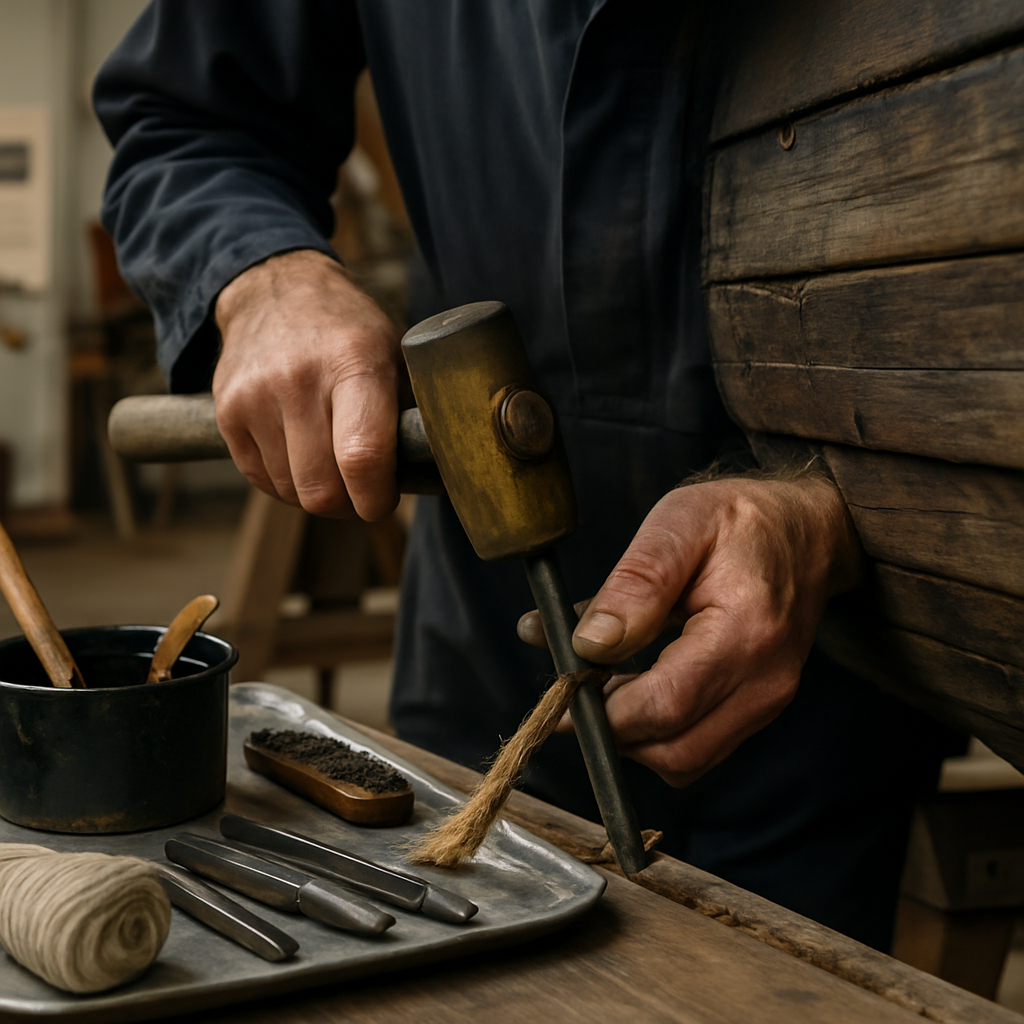
Oakum — loosely twisted hemp or jute fibre, often reclaimed from old rope — was stuffed into seams and then coated with pine tar or heated pitch. This combo is flexible, somewhat water‑repellent, and repairable. It’s been used extensively in Northern Europe and North America and remains the go‑to for many restorations seeking authenticity. There’s a tactile satisfaction to packing oakum: it compresses to form a dense barrier and ages in a way that tells a visual story of the vessel’s life.
Yarn, Cotton, and Varnish
Smaller boats or those with narrow seams sometimes used cotton or spun yarn sealed with varnish or linseed oil finishes. These were lighter solutions and worked well where heavy tar would be inappropriate or where aesthetics mattered more.
Hot Pitch, Rosin, and Tallow
Before standardized materials existed, hot mixtures of pitch, rosin, and animal tallow were used to seal fastenings, small gaps, and to protect timber against marine organisms. These methods required skill — overheating pitch can damage wood and is messy — but they offered a durable, waterproof finish in the era before industrial sealants.
Hand Tools and Techniques
The right tools matter: caulking irons, mallets, seam gauges, chisels, and scrapers are the classics. The craft is about feel: you learn how hard to hit the iron, how much packing to add, and when to leave space for the seal coat. It’s low tech, but high skill.
Materials and Methods: Caulking Through the Ages
Materials have evolved from organic fibers and tar to synthetic polymers. Each era brought tradeoffs. Here’s a practical rundown to help you choose wisely if you’re maintaining a historic boat or advising a conservation project.
Hemp/Oakum and Tar
Pros: historically accurate, flexible, reversible, allows timber movement. Cons: requires regular maintenance, can be messy, attracts dirt if left exposed.
Method: remove old material, clean seam, pack oakum, top coat with hot pine tar. Used for authenticity and for vessels where controlled timber movement is essential.
Cotton/Yarn with Oil or Varnish
Pros: lighter, suitable for small craft, less darkening of wood. Cons: less durable on wide seams and in heavy abrasion zones. This was historically popular for skiffs and small day boats.
Polymers — Polysulfide, Polyurethane, and Mastics
Pros: long‑lasting, waterproof, easy to apply. Cons: can be too rigid or non‑breathable, often irreversible, potential chemical incompatibility with timber or paints.
Modern sealants shine on working boats where downtime is costly, but they can be the wrong choice for museum pieces. A polysulfide seam will be great at keeping water out, but years down the line, removal is difficult without damaging wood. Use selectively.
Epoxy and Structural Consolidants
Pros: incredible strength and ability to consolidate rotten wood. Cons: irreversible in many forms, can change the vessel’s mechanical behavior, and obscure original joinery.
Conservationists use epoxy sparingly, often as a last resort when timber would otherwise be lost. When applied, documentation is essential: notes, photos, and clear labelling of interventions help maintain transparency for future caretakers.
Practical Vessel Maintenance: From Caulking to Seals on Historic Boats
Let’s get practical. Below you’ll find inspection tips, step‑by‑step re‑caulking guidance (traditional oakum method), when to consider modern materials, and a realistic maintenance schedule. If you maintain a boat, these guidelines will help you plan work and budget time.
Inspection and Assessment
Ask the right questions: Where are the leaks? Are fastenings loose? Is there soft timber near seams? Look inside the bilge with a torch to pinpoint weeps. Feel along planks for movement. Measure seam widths and document everything with photos and notes. Regular records let you see trends — one small weep this year might be a full seam failure in five if ignored.
Step-by-Step: Re-Caulking with Oakum and Tar
- Work on a hauled boat if practical. Dry conditions make the job cleaner and easier to judge fit.
- Remove old degraded caulking with care. Avoid gouging plank edges or altering the original bevel of the seam.
- Clean the seam of old pitch, paint, and debris. A sharp chisel or scraper and a brass wire brush are useful here.
- Prepare oakum and warm pine tar in a safe, controlled way. Do not overheat; tar should be warm and workable, not boiling.
- Pack oakum into the seam with caulking irons and a mallet. Aim for dense, even packing. Leave a recess for the tar finish if historically appropriate.
- Apply pine tar or pitch over the packed oakum to seal. Smooth while warm. Allow to cool, then fair and paint or varnish as needed.
- Document the job: materials used, seam locations, date, and any timber repairs done alongside the caulking.
When to Use Modern Sealants or Epoxy
If your boat sees heavy use, or you need a watertight solution with less frequent maintenance, modern sealants can be a reasonable choice. Consider these rules of thumb:
- Use polysulfide/polyurethane where seam movement is moderate and long durability is required.
- Always use a backer rod to control depth and prevent three‑sided adhesion that stresses timber.
- Test adhesion and paint compatibility in a discrete area before full application.
- Reserve epoxy for consolidation of degraded timber surfaces, not routine seams, unless absolutely necessary for structural reasons.
Routine Maintenance Schedule
No two vessels are the same, but here’s a practical schedule to keep you on track:
- Annual: full visual inspection, fastener checks, bilge condition, minor touch‑ups.
- Every 2–5 years: touch‑up caulking in high‑wear areas or after significant use.
- Every 10–20 years: major re‑caulking or plank replacement for active boats; longer intervals are possible for museum boats kept ashore.
Conservation at AC Museum: Preserving Seals and Hull Joints
AC Museum balances public access, vessel safety, and historical truth. Our conservation decisions follow a few guiding principles: minimal intervention, documentation, reversibility where possible, and public education. Here’s how that plays out in practice.
Research and Documentation
Before any seam is disturbed, we research the vessel’s construction, past repairs, and likely original materials. We photograph, sketch, and log every intervention. This isn’t bureaucracy — it’s how we keep the story intact for the next generation of caretakers and historians.
Emergency Stabilization
If a hull is actively leaking or a plank is failing, we prioritize stabilization to prevent loss. Temporary patches, bilge pumping, or shoring frames buy time for a considered conservation plan. Temporary measures are chosen for reversibility so we don’t introduce problems while solving others.
Selective Replacement and Ethical Choices
When rot has eaten through planks or frames, AC Museum conservators perform the least invasive repair possible. We replace minimal sections using matching timber species and traditional fastening methods. Modern materials are used only when they are the best option for long‑term survival, and every use is fully documented.
Environmental Management
One of the best ways to reduce seaming work is to control the environment. AC Museum uses covered storage, controlled ventilation, and humidity management to slow timber movement and decay. This reduces intervention frequency and preserves original materials longer.
How Maintenance Practices Shape Maritime History Learning at AC Museum
Maintenance is part of the narrative. At AC Museum, caulking and sealing are used not only to preserve but also to teach. Visitors don’t just see a finished hull; they see the process, the tools, and the decisions that go into conserving maritime heritage.
Hands‑On Demonstrations and Workshops
Watching a conservator pack oakum or apply tar is surprisingly engaging. We run demonstrations and hands‑on workshops so you can try a caulking iron yourself under supervision. These sessions generate “aha” moments: visitors leave with a new appreciation for the craft and a better understanding of why conservation choices are sometimes conservative.
Stories Behind the Seams
Each seam can spark a story — about where a ship made port, who worked on it, and how technology changed over time. Interpretive panels, tool displays, and before‑and‑after repair photos help visitors connect maintenance tasks to broader maritime history: trade, labor, and technological shifts.
Community Engagement and Skill Transmission
Maintaining boats is one of those skills you learn by doing, and AC Museum intentionally involves volunteers, apprentices, and local shipwrights. That keeps skills alive and strengthens community ties — a practical conservation impact that ripples beyond the museum walls.
Academic Partnerships
We also collaborate with maritime historians and conservation scientists to research the best materials and methods. These partnerships keep our techniques grounded in current research while respecting historical practice.
Practical Tips, Troubleshooting, and Common Questions
Before you head to the boatyard, here are quick, actionable tips and answers to common problems.
Quick Tips
- Always document before you touch a seam — a photo can save hours of debate later.
- Work in dry conditions when packing organic materials; damp conditions make for sloppy seals.
- Don’t overpack seams. Leave room for a final seal coat and for timber to move.
- When trying modern sealants, do a small test patch to check paint adhesion and timber reaction.
Troubleshooting
If a seam keeps leaking after re‑caulking, inspect fastenings and the adjacent plank for rot. Often the problem isn’t the caulking but a failed fastener or a hidden void. If you see soft wood, call in a conservator or experienced shipwright. Rot requires targeted repair, not cosmetic sealing.
Frequently Asked Questions — Caulking, Sealing, and Historic Vessel Maintenance
What is the best caulking material for a historic wooden boat?
For a historically accurate vessel, oakum packed and finished with pine tar or pitch is often the best choice because it’s compatible with timber movement and reversible. If you want long, low‑maintenance seams for an actively used boat, modern polysulfide or polyurethane sealants are options, but they may be harder to remove and can alter the timber’s behavior. Always weigh authenticity against function and document your choice.
How often should I re-caulk my boat?
It depends on use and environment. For active boats, expect touch‑ups every 2–5 years and major re‑caulking every 10–20 years. Museum boats kept ashore and in climate‑controlled storage can go longer between major interventions. Annual inspections are essential so you can catch small problems early before they become expensive repairs.
Can I use modern sealants on a historic vessel?
Yes, but with caution. Modern sealants can provide excellent waterproofing, yet some are rigid or non‑breathable, which might trap moisture and promote rot. If you choose modern products, test compatibility, use backer rods to control depth, and document everything. For interpretive or museum pieces, traditional materials are usually preferred.
How do I know if there’s rot near a seam?
Look for spongy or soft wood, dark discoloration, persistent leaks, and loose fastenings. Use a screwdriver or awl to probe suspect areas—sound timber resists the probe, rotten timber yields. If you suspect rot, stop cosmetic caulking and consult a conservator or experienced shipwright; rot usually needs consolidation or partial replacement, not simple sealing.
Is it possible to learn caulking and do it yourself?
Absolutely. You can learn basic caulking at workshops or under an experienced boatwright’s supervision. Small boats are good practice projects. For major restorations or historic vessels, it’s best to work with a professional or conservator to avoid damaging original material.
What tools do I need for traditional caulking?
Core hand tools include caulking irons of various profiles, a wooden or brass mallet, chisels, seam gauges, scrapers, and a basin for heating tar safely. For modern sealants, you’ll need backer rods, caulking guns, and finishing tools. Proper tools plus good technique make the job cleaner and more durable.
When should epoxy be used in repairs?
Epoxy is best reserved for consolidating severely degraded timber or as a structural stabilizer when no other method will keep the original element. It’s powerful, but often irreversible and can change how the hull moves. Use epoxy only after careful evaluation and always document its use.
How do I choose timber for replacement planks or frames?
Choose timber that matches the original species and characteristics where possible—this preserves historical accuracy and mechanical compatibility. Factors include grain, durability in saltwater, seasoning, and availability. Check our resources on timber selection and sourcing to guide your decision and ensure you pick appropriate, sustainably sourced material.
Can mixing traditional and modern methods work?
Yes, sometimes a pragmatic blend is the right answer. For example, packing seams with oakum and finishing with a compatible modern sealant in high‑wear areas can balance authenticity and durability. If you mix, document everything and consider reversibility for future conservators.
Does AC Museum offer training or advice for owners?
Yes—AC Museum runs workshops, demonstrations, and volunteer programs that teach traditional skills like oakum caulking and tar finishing. We also provide conservation consultations for owners and institutions that need guidance on materials, methods, and documentation.
Final Thoughts
Caulking, sealing, and historic vessel maintenance sit at the intersection of craft, science, and storytelling. Whether you’re a boat owner keeping a family skiff afloat or a conservator preserving a century‑old workboat, the choices you make about seams and sealants shape how the vessel survives and how its history is told.
At AC Museum we treat those decisions with care: prioritizing minimal intervention, choosing materials that respect timber movement, documenting every step, and using maintenance as an educational tool. If you’re curious to see the work in person, join a workshop or sign up for a restoration tour — watching a caulker at work gives you a new respect for every dry bilge and every story a seam can tell.
Further Help and Contact
Want to learn more or get involved? AC Museum offers workshops, volunteer maintenance programs, and conservation consultations. Reach out to our conservation team to discuss your vessel’s needs, get help choosing materials, or find upcoming demonstrations you can attend.