Discover Why Joinery for Wooden Boat Building Still Matters — See Historic Craft Brought to Life
Attention: if you love the smell of fresh-cut timber, the satisfying thunk of a trenail driven home, or the quiet genius of old shipwright tricks, this piece is for you. Interest: Joinery for Wooden Boat Building is more than carpentry; it’s a dialogue between wood, sea, and human hands. Desire: imagine tracing a keel’s curve with your fingers, understanding why a mortise-and-tenon survived centuries, and feeling confident enough to try a scarf joint yourself. Action: read on to learn the historic techniques AC Museum showcases, the woods and joints that shaped maritime history, how restorers document and conserve joinery, and how you can experience all of this in person.
Joinery for Wooden Boat Building: A Glimpse into Historic Techniques at AC Museum
Joinery for Wooden Boat Building is an umbrella term for the ways timbers are joined to resist water, weight, and motion. At AC Museum you get a front-row seat to how boatwrights solved problems long before power tools and epoxy resins. The museum’s exhibits show whole hulls, cross-sections, and close-ups of knees, scarfed keels, and pegged frames so you can see the logic behind each union of wood. It’s one thing to read about a joint; it’s another to see the grain follow a curve where a steam-bent rib hugs the hull, and to understand how that grain continuity gives strength.
Many of the joining methods you’ll encounter extend beyond cutting and fitting; they involve specialized fastening and tensioning techniques. If you want a focused look at how boats were held together before modern adhesives, the museum has a great resource that explains those details: Lashing, Stitching, and Fastening Methods. This guide connects traditional fasteners—like lashing and stitching—to the larger context of joinery, showing how each choice affected repairability and performance at sea.
For a broader primer on the historical backgrounds and practical steps of wooden boat creation, AC Museum offers an excellent overview that ties joinery choices to cultural and regional building traditions. See their compilation on Traditional Boat Construction Techniques to understand why certain joints dominated in one place and not another, and how those techniques influenced everything from hull shape to maintenance cycles over generations of boatwrights.
When you want to dive deeper into the shell of the vessel itself—the planking styles, frame layouts, and how joints behave in the hull—check the museum’s detailed notes on actual hull practices at Traditional Hull Construction Techniques. That page breaks down hull-specific joinery, from carvel seams to lapstrake overlaps, and helps you see how joinery is literally the skeleton and skin working together to make a seaworthy craft.
Why joinery choices mattered then — and still do now
Shipwrights chose joints for reasons beyond mere strength. They considered timber availability, expected maintenance, repairability while at sea, and the tools at hand. A trenail that swells when wet might sound quaint, but in many cases it outperformed an iron bolt that rusted away. AC Museum’s interpretation highlights these trade-offs so you can appreciate joinery as clever, context-driven engineering, not just tradition for tradition’s sake.
Traditional Wood Joinery Methods for Wooden Boat Building Showcased at AC Museum
The museum’s displays unpack classic joinery methods you’ll meet again and again when studying wooden boats. Here are the heavy hitters you’ll see up close and possibly touch during workshops:
- Scarf joints: The elegant way to splice long timbers. Scarfs transfer bending loads along a long mating surface so the join isn’t a weak point.
- Lapstrake (clinker) seams: Overlapping planks nailed or riveted together; they give a hull flexibility and are forgiving under impact.
- Carvel planking: Edge-to-edge planking fastened to frames, producing a smooth exterior ideal for caulking.
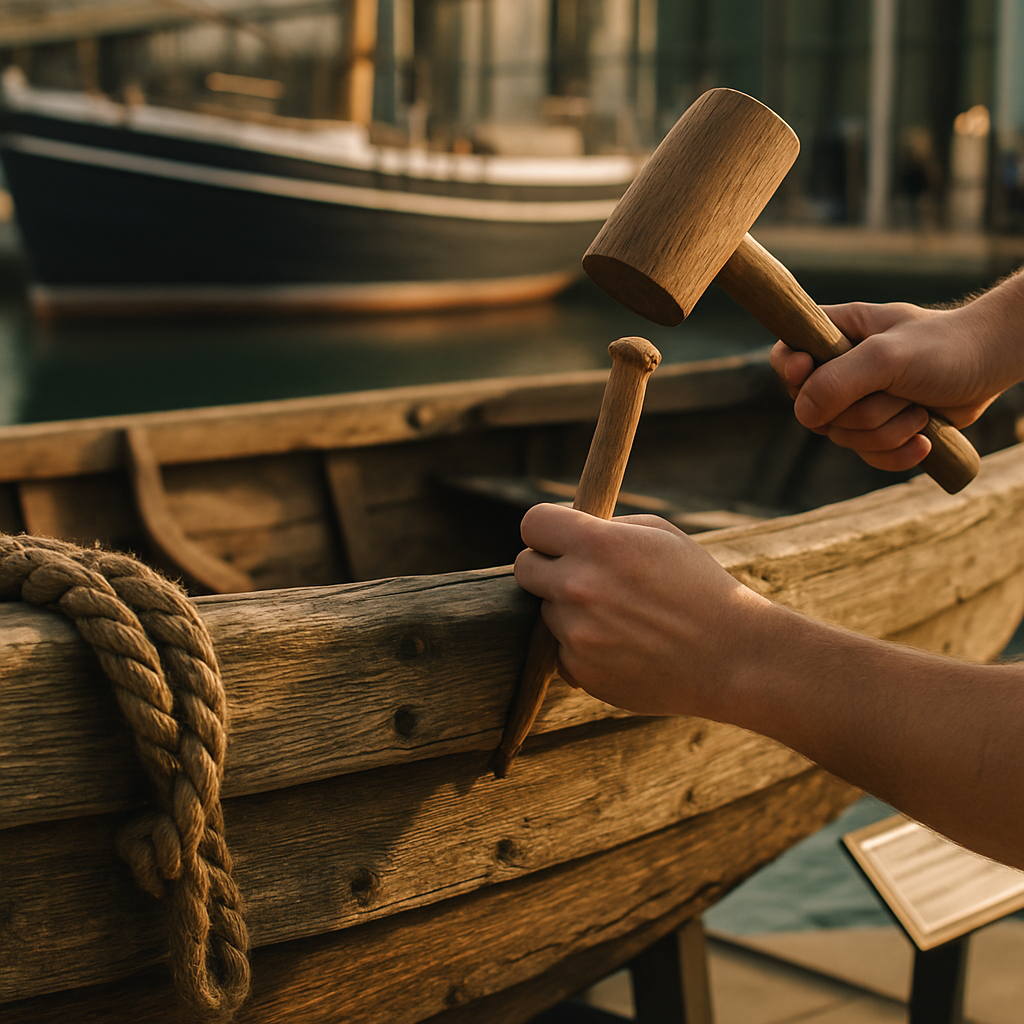
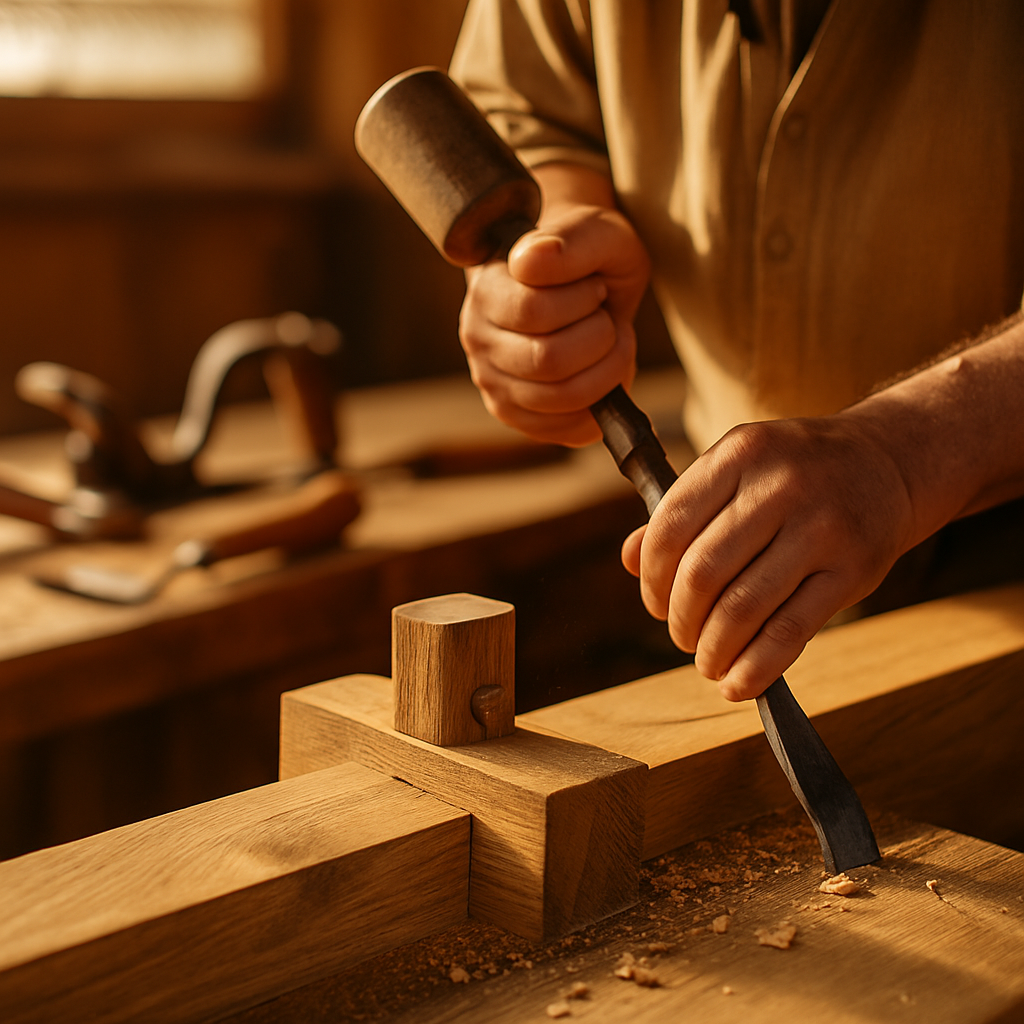
- Mortise-and-tenon: A time-tested interlock used in frames and planking; when pegged with trenails, it becomes incredibly durable.
- Butt blocks and internal reinforcements: Simple yet effective—blocks glued and fastened inside the hull to back up plank ends.
- Steam-bent frames and knees: Using steam to make wood pliable for bending into complex curves, preserving grain continuity.
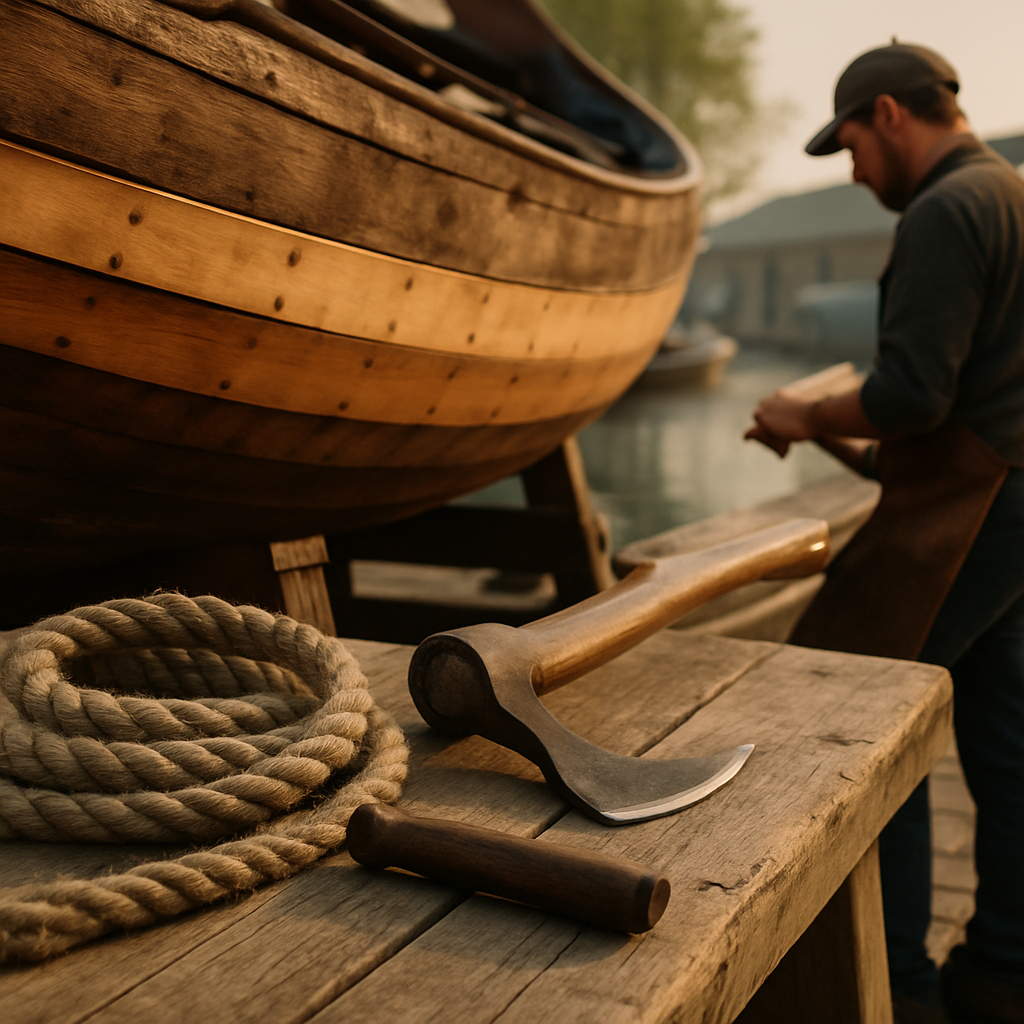
Not only do the physical examples show how each joint is made, but the museum pairs them with the tools of the trade—adzes, hand planes, braces, and augers—to demonstrate how craftsmen achieved such precision without modern machinery. Watching a skilled demonstrator scribe a plank to a frame is nothing short of hypnotic: they fit for the grain, not the line, and that makes all the difference.
Tools and tiny techniques that make a big difference
Small details—how a chamfer is cut, the angle of a scarf, the diameter of a trenail—are where joinery shines. AC Museum’s demonstrations highlight these subtleties. For instance, the practice of ‘back-spiriting’ a scarf—cutting a slight undercut so plank ends lock tight—may seem like fudging, but it prevents water paths and reduces stress risers. These nuanced practices are fun to learn and immediately practical if you ever decide to repair a dinghy or restore a plank.
Selecting Wood and Crafting Joints: Joinery for Wooden Boat Building in Maritime History
Good joinery starts long before the saw meets the wood: it starts in the forest. The choice of timber affects durability, workability, and how joints behave over time. AC Museum’s exhibits showcase and explain species selection, often with real samples and cutaways showing how different woods respond to moisture and load.
- Oak: Phenomenally tough and rot-resistant, oak was the backbone of keels and frames in many northern shipbuilding traditions.
- Teak and mahogany: Natural oils and stability made these favorites for planking and decking where a long, durable finish was desired.
- Cedar, larch, and spruce: Lighter species used in smaller craft or where weight savings were necessary.
- Douglas fir and pine: Economical and often used for long planks and spars when straight growth was needed.
After timber selection comes lofting—the magic act of translating plans into full-scale shapes. Lofting is both geometric and artistic. You’ll see how lines are drawn, buttocks and waterlines laid out, and how patterns for frames, planks, and knees are created. This process ensures the parts will fit together and the fairing of the hull will be achievable with joinery that respects grain and thickness.
Cutting and fitting: the heart of joinery
When you watch a joiner at work, notice the sequence: cut, dry-fit, trim, dry-fit again, and only then fasten. Dry-fitting is almost a ritual. A plank is scribed to the frame—matching every dip and rise of the frame’s surface—so the join is intimate and even. Trenails are often driven only after long testing; scarfs are trialed and adjusted. This patient, iterative approach is central to successful joinery for wooden boat building.
From Frames to Fairing: Joinery for Wooden Boat Building Demonstrations at AC Museum
Seeing a boat go from skeleton to sleek hull is one of the most satisfying experiences at AC Museum. Demonstrations typically follow the natural flow of a build:
- Lofting and creating full-sized templates for frames and planks.
- Shaping the keel, stem, and sternpost; cutting scarfs and bedding surfaces.
- Assembling frames—mortise-and-tenon, pegging, bolting—and checking alignment.
- Planking, whether lapstrake or carvel, carefully easing each plank into position.
- Fairing: planing and sanding planks so the hull is smooth and hydrodynamic; it’s here that joinery’s aesthetic payoff is obvious.
- Finishing touches: caulking, sealing, and fitting deck joinery and hardware.
The demonstrations emphasize the human choices that guide each step. You’ll hear about trade-offs—why a builder chose a scarf over a butt block, or why trenails were preferred in a certain era. The museum’s live builds and restorations allow you to observe how joinery decisions are revised in real time, and why experienced craftspersons often eschew shortcuts that compromise the hull’s long-term behavior.
Fairing: when joinery becomes poetry
Fairing is the sculptural part of boatbuilding. It’s where the sum of all joints must read as one smooth surface. Poor joinery shows up here as bumps, gaps, or a hull that refuses to sit properly in the water. The museum’s hands-on sessions let you try planing and fairing—surprisingly meditative tasks that reward patience and a good eye.
Common Boat Joinery Types — Quick Reference
| Joint Type | Typical Use | Benefits |
|---|---|---|
| Scarf joint | Joining long planks or keel members | Smooth load transfer, reduces stress concentration |
| Mortise-and-tenon | Joining frames and plank intersections in traditional hulls | Strong mechanical interlock; durable over centuries |
| Clinker lap | Small craft and fishing boats | Light, forgiving, easy to repair |
| Butt & block | Joining plank ends with internal reinforcement | Simple, economical, good for repairs |
Conservation and Restoration: How AC Museum Documents Joinery for Wooden Boat Building
Conservation at AC Museum isn’t about making boats look new; it’s about preserving stories encoded in joinery. The museum documents joinery through a combination of meticulous old-school recording and modern technology. Each restoration begins with a thorough survey: measured drawings, photo records, and often 3D scans that capture the joint geometry and condition at the start of work.
Why is this documentation important? Because interventions are permanent—or at least long-lasting. If a conservator replaces a degraded mortise-and-tenon with a modern bolted splice, future generations need to know what was done, why, and where original fabric remains. AC Museum keeps detailed logs, annotated photographs, and sometimes dendrochronology results so the provenance of timbers and the story of repairs are transparent.
Modern tools meet old craft
Photogrammetry and laser scanning are fantastic. They allow the museum to create accurate 3D models of joints and hull sections, which can be studied off-site by researchers or used to fabricate sympathetic replacements. Yet the human eye and hand remain irreplaceable. Conservators still open a joint, examine historic pegging patterns, and decide whether splicing or consolidation is the least invasive option. It’s a balancing act between retaining original material and ensuring structural safety for display or minimal sailing.
Practical techniques used during conservation
- Micro-excavation: Removing modern fillers to reveal original peg holes and joinery details.
- Reversible repairs: Using stainless fastenings combined with wooden plugs so future conservators can undo work if needed.
- Controlled environmental stabilization: Conditioning timbers before reassembly to prevent future movement stresses.
Plan Your Visit: Experiencing Joinery for Wooden Boat Building Through Engaging Exhibits
Want to see joinery in action? Plan a trip to AC Museum with a little intention and you’ll get the most out of it. Here’s how to approach a visit so you don’t miss the best joinery experiences.
- Check the schedule: Demonstrations and live workshops happen on set days. Book ahead for hands-on sessions, as spaces fill quickly.
- Take a guided tour: Guides point out joinery details that casual visitors often miss—trenail patterns, scarfs, and subtle tool marks that reveal a builder’s choices.
- Visit the boatyard area: Active restorations show the decision-making process; you’ll see how conservators test joints and how repairs are planned.
- Try a workshop: Even a short class in scarf cutting, trunnel-making, or caulking builds your appreciation and gives you a hands-on memory.
- Ask questions: Staff and volunteers love to talk shop. Ask about timber sources, historic fasteners, or how a kneeboard was shaped; you’ll usually get a thoughtful, practical answer.
If you’re researching for study or restoration, contact the museum in advance about archive access and specialist talks—AC Museum often welcomes serious inquiries and can arrange extended access for researchers.
What to look for during your visit
When you’re standing beside a hull, here are simple things to notice that tell a story about joinery:
- What fasteners are present? Wooden trunnels, iron nails, or copper roves signal era and repair history.
- Does a rib have continuous grain? That usually indicates steam-bending rather than lamination.
- How long are scarfs? Very long scarfs suggest high-stress areas, while short hooked scarfs might be economical repairs.
- Are there signs of re-caulking or modern sealants? Those point to maintenance cycles and evolving techniques.
Frequently Asked Questions — Joinery for Wooden Boat Building
1. What exactly is “joinery for wooden boat building” and why should you care?
If you’re wondering what all the fuss is about, joinery is simply how the bits of a wooden boat are fitted and fastened so they behave as one. Good joinery affects strength, watertightness, and longevity. It’s the reason a centuries-old hull can still hold together and why modern repairs that ignore grain or load paths fail. You should care because joinery reveals the choices and compromises of past builders—and understanding those decisions helps you maintain, restore, or build a better boat.
2. How can you learn traditional joinery techniques?
You’ve got options. Start with short workshops—many museums, including AC Museum, run hands-on sessions where you cut a scarf or make a trenail. Complement that with books, online tutorials, and apprenticeship-style learning with a local boatyard. The fastest route to confidence is practice on small projects: repair a dinghy, build a paddle, or plank a small skiff. Don’t rush—skill comes from repetition and learning to read wood rather than forcing it into shape.
3. Which wood species are best for different joinery tasks?
There’s no single answer; it depends on the part. Oak is great for frames and keels because it’s tough and resists rot when kept ventilated. Teak and mahogany are prized for planking and decks due to stability and oily nature. Cedar and larch are light and rot-resistant for smaller boats. Douglas fir and pine work for spars and long planks where straight grain matters. Match species to the job and local availability—sustainability matters too.
4. How long does it take to become proficient at boat joinery?
Proficiency varies. With focused classes and daily practice, you can cut decent scarfs and drive neat trenails within a few months. Mastery—reading grain, lofting complex lines, and doing flawless fairing—takes years. Don’t get stuck on timelines; set small goals. Build a tiny boat, restore a plank, then tackle a larger project. Each step teaches a layer of judgment you can’t get from theory alone.
5. Can you try joinery techniques at AC Museum, and do you need prior experience?
Yes, AC Museum offers demonstrations and beginner-friendly workshops. You don’t need prior experience for introductory sessions—just patience and a willingness to learn. For advanced classes, some basic skill is helpful. Book in advance; spaces are limited. The hands-on approach at the museum is one of the best ways to turn abstract concepts into real skills: you’ll leave with a small project and a head full of practical tips.
6. How do conservators decide whether to repair or replace original joinery?
Conservators follow minimal intervention principles. The question is: will a repair preserve the historic fabric and function without compromising safety? If a joint can be consolidated or spliced locally, that’s preferred. If the timber is too degraded, a sympathetic replacement—clearly documented and reversible where possible—is chosen. Every step is recorded so future conservators know what was changed and why.
7. Are restored wooden boats safe to sail after joinery repair?
Often, yes—but it depends on the quality of the restoration and the intended use. Museums may restore hulls for static display or limited sailing. For regular use, a certified marine survey and appropriate structural work are essential. Good restorations use correct materials, modern engineering judgment where necessary, and thorough testing. Safety always takes precedence over aesthetics.
8. How can you tell if a joint is original or a later repair?
Look closely: mismatched timber species, different fastener types (for example, modern stainless bolts vs. wooden trenails), and inconsistent tool marks are giveaways. Newer joins often have modern sealants or fresh-cut surfaces. Conservators also use photographic records, microscopic wood analysis, and 3D scans to confirm whether a join is original or an intervention.
9. What basic tools should you buy to start practicing joinery at home?
Keep it simple and quality-focused: a good saw, chisels, a combination plane, spokeshave, block plane, braces and auger bits, and a set of clamps. An adze and drawknife are great additions for shaping frames. Buy decent hand tools rather than cheap, mass-produced gear—sharp, well-tuned tools teach you to cut accurately and are safer to use.
10. How do you maintain joinery to keep wooden boats healthy?
Routine inspection and maintenance are everything. Check seams, fastenings, and caulking annually. Keep the bilge dry, ventilate enclosed spaces, and re-calk seams before they fail. Treat exposed timber with appropriate oils or varnishes, but avoid trapping moisture under non-breathable coatings. Early, modest repairs are far cheaper and easier than large-scale restoration later on.
Conclusion — Why Joinery for Wooden Boat Building Still Captivates
Joinery for Wooden Boat Building ties together craft, history, and engineering. It’s tactile, logical, and often beautiful. AC Museum does a superb job of making these connections visible: live demonstrations show skill in action, conservation projects reveal decision-making, and workshops let you try the craft yourself.
If you care about maritime heritage, or you’re simply curious about how things are made, experiencing traditional joinery up close changes your understanding of boats forever. So, pack a notebook, bring a curious mind, and if you can, join a hands-on session. Once you’ve scribed a plank and driven in your first trenail, you’ll see why joinery still matters—it’s where history, material, and human skill meet, and where every boat tells a story in its joints.